ADHD Founder's Guide To Mood Charts For Adults
Ditch burnout. Learn to use mood charts for adults, engineered for ADHD founders. Track what matters, build a sustainable system.
Jan Kutschera
You know the day. You wake up sharp, knock out a week’s worth of strategic thinking before lunch, pitch like a machine, and feel almost suspiciously competent. Then the next day you can’t answer a simple email, a team question feels physically offensive, Slack pings sound like sandpaper, and you start wondering whether you’re lazy, broken, or just terrible at running a company.
That story is common among founders with ADHD. The mistake is treating it like a character problem. It’s not. It’s an operating system problem.
Mood charts for adults sound soft and generic. They are often filed next to gratitude journals and never-opened meditation apps. That’s a miss. Used properly, a mood chart is not a diary. It’s a dashboard. It tells you when your brain is available for deep work, when your sleep wrecked your judgment, when meetings drained your cognitive bandwidth, and when a delegation bottleneck turned into a mood crash.
Table of Contents
- Your Brain Is a Dashboard Not a Mystery
- Why Generic Mood Charts Fail the ADHD Brain
- Designing Your High-Signal Mood Dashboard
- The Five-Minute Daily Log for Maximum Insight
- Reading the Patterns Your Brain Is Showing You
- Integrating Your Chart into Your Daily Operating System
- Your Questions Answered
Your Brain Is a Dashboard Not a Mystery
Founders love data until the data is about them.
You’ll track CAC, churn, runway, pipeline coverage, hiring velocity, and retention. But when your own performance swings wildly, you call it “one of those weeks” and keep pushing. That’s backward. If you’re the founder, your mood, energy, and focus are business-critical variables.
Mood charts started in bipolar management, using a seven-point scale from +3 to -3 to track mood alongside sleep and medication, and modern app research shows 64% of users preferred line graphs for reviewing trends while many rejected simplistic numerical ratings altogether, which is exactly why a useful system has to be visual and nuanced, not cartoonish or vague (Positive Psychology on mood charts).
Your good day is not random
A strong Monday often looks magical from the outside. It usually isn’t. You probably slept decently, had less context switching, touched work that matched your strengths, and got enough momentum early to stay engaged.
A terrible Tuesday often has the same kind of logic. You stacked calls, skipped real food, started with admin, and spent half the day doing tasks that should’ve been delegated three quarters ago.
Practical rule: If your state changes your output, your state belongs on the dashboard.
That’s why I like treating mood charts for adults as an executive layer for the brain. Not “how do I feel today?” More like: what conditions created today’s version of me?
Build evidence outside your head
If you’ve already tried to build your second brain, you understand the basic move. Stop relying on recall. Externalize the system. The same principle applies here.
Your brain with ADHD is brilliant at pattern recognition and terrible at neutral self-observation in the moment. When you’re up, you overpromise. When you’re down, you rewrite your identity. A chart breaks that lie cycle.
Use it like an operator. Log the day. Review the pattern. Adjust the machine.
Why Generic Mood Charts Fail the ADHD Brain
Most mood apps are built for compliance, not insight. They want you to tap a smiley face, maybe choose “fine” or “bad,” and move on. That’s not data. That’s decoration.
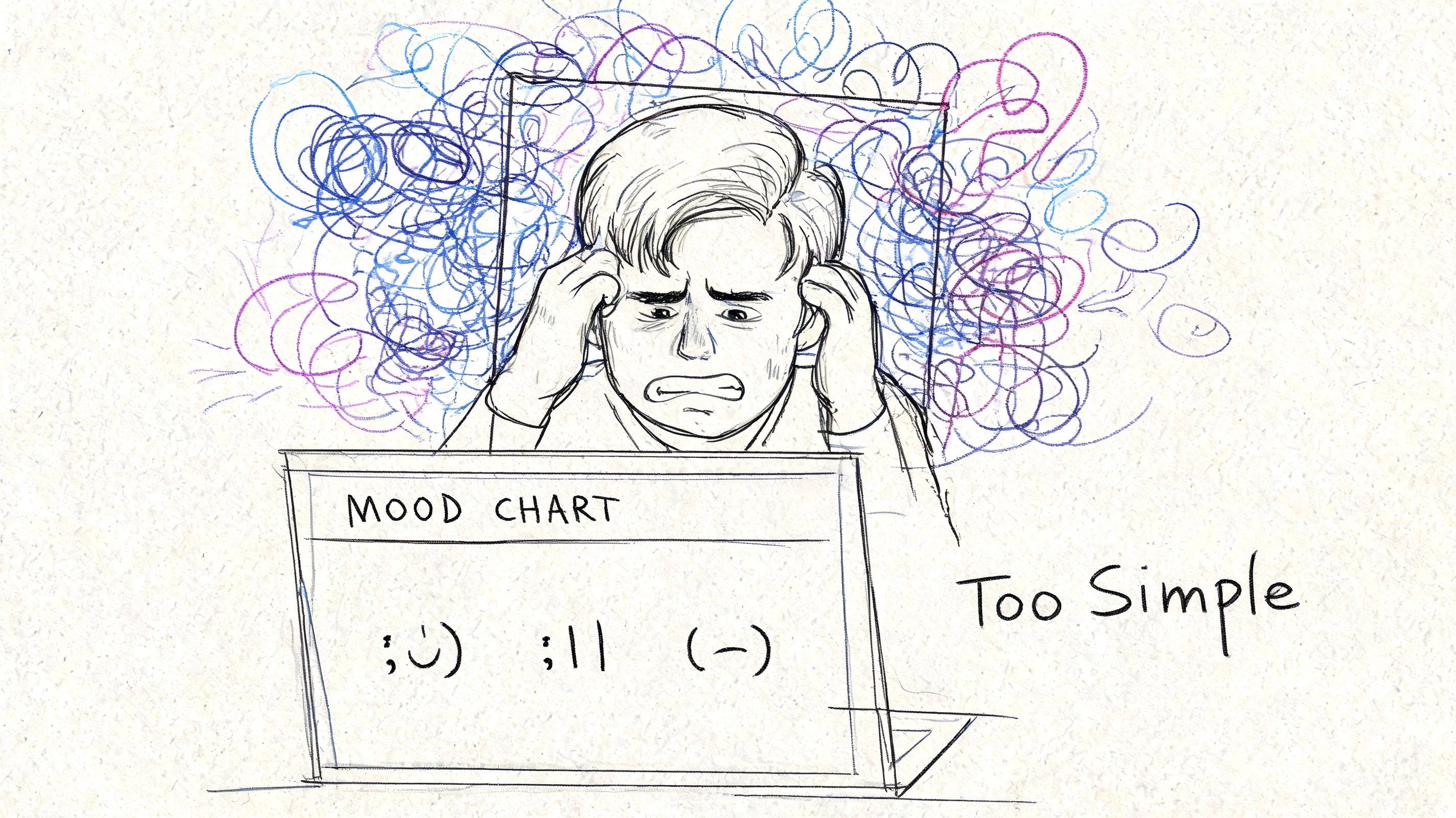
If you’ve failed at this before, the problem probably wasn’t discipline. The tool was low-resolution.
A 2021 JMIR Mental Health user study of 22 people found that users often started tracking because of stress or a need for self-reflection, but they also avoided logging negative moods, which wrecks the value of a simple tracker for ADHD because the bad states are often where the useful signal lives (JMIR Mental Health study on mood-tracking app use).
Three reasons the standard app falls apart
The first failure is low-information input. A sad face tells you nothing about whether you were tired, overstimulated, underfed, bored, ashamed, lonely, or stuck in administrative sludge.
The second failure is no separation between mood and performance. ADHD founders often confuse low stimulation with low motivation, and overload with anxiety. Generic charts collapse all of that into one blob.
The third failure is avoidance by design. If the app asks “How are you feeling?” after a messy day, your brain says, “I’d rather not.” If it asks, “How many meetings did I have, how much sleep did I get, and what task type dominated the day?” that feels more neutral. More solvable.
Why this matters for founders
A founder doesn’t just need emotional awareness. A founder needs operational awareness.
If your executive dysfunction shows up as inconsistency, decision drag, inbox paralysis, or random hostility toward routine tasks, a fluffy tracker won’t help. You need a system that maps internal state to business conditions. If that topic hits home, read this breakdown of ADHD executive dysfunction in real work.
The most dangerous interpretation is “I’m off.” The better question is “What variables changed?”
That shift matters. It turns shame into diagnostics.
Designing Your High-Signal Mood Dashboard
Most mood charts for adults track too little. For an ADHD founder, that’s fatal. You don’t need a prettier mood log. You need a high-signal dashboard that shows why your brain showed up the way it did.
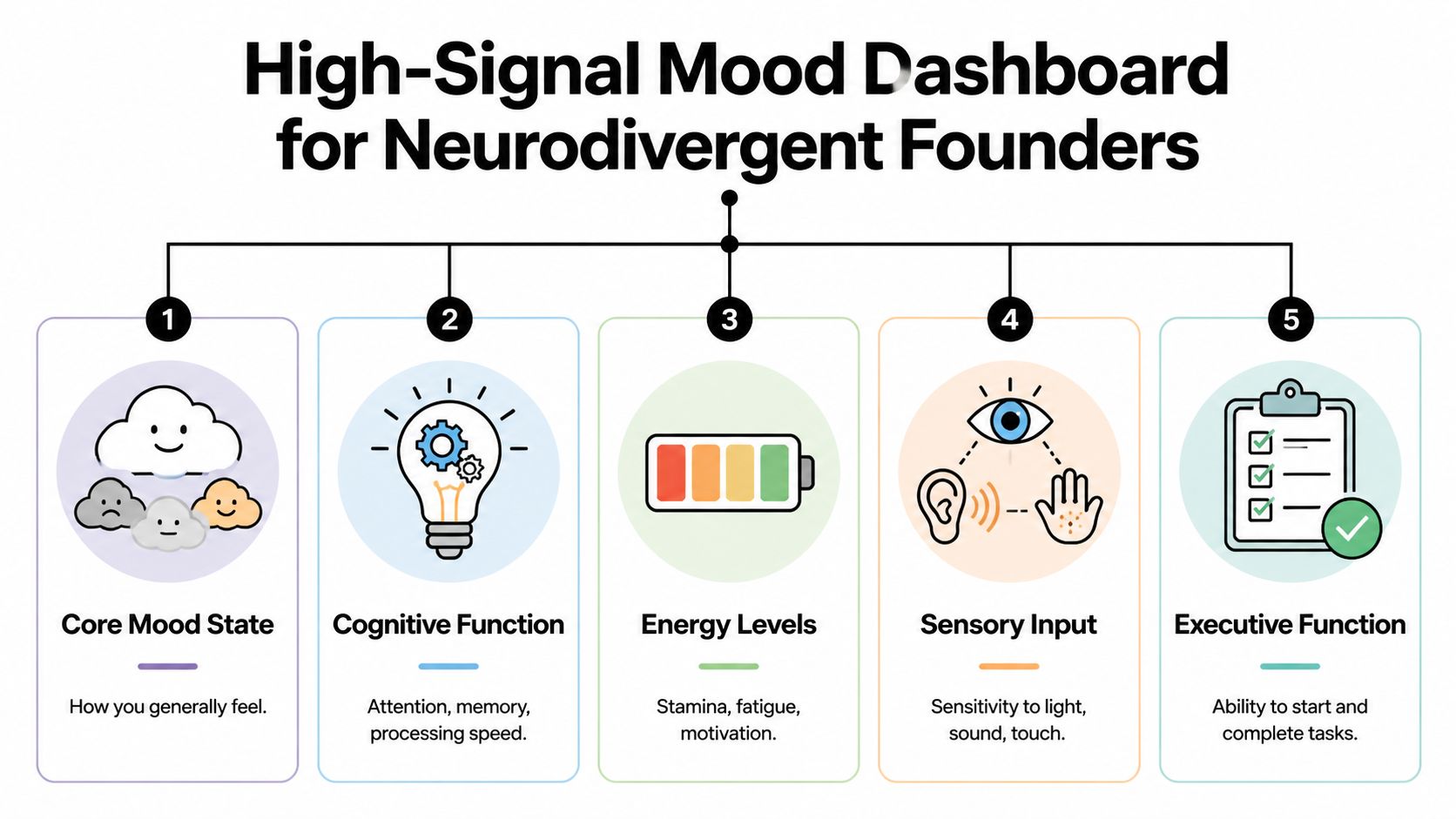
A useful dashboard has to be fast enough to maintain and rich enough to teach you something. That means tracking a handful of variables that drive output.
A cited analysis claims that standard charts often miss ADHD-specific bio-optimization markers, including protein timing, and also points to delegation-related load as a missing variable, with some newer app approaches connecting low mood to under-delegated tasks in ADHD founders (analysis discussing ADHD-specific mood chart gaps). Whether you use those exact figures or not, the operational insight is right: founders need to log more than “good” or “bad.”
Track dimensions not vibes
Use a chart with separate fields. Don’t compress your day into one mood score.
My recommendation:
- Mood state. Use a simple range, but add emotion labels. “Flat,” “irritable,” “driven,” “anxious,” “calm,” “restless” is better than “2/5.”
- Energy level. Track physical and mental energy separately if you can. A lot of ADHD people are mentally scattered while physically wired.
- Focus quality. Deep, shallow, fragmented, avoidant. This field matters more than mood on many workdays.
- Executive function. Could you start tasks, sequence tasks, and finish tasks? That’s a distinct category.
- Sensory load. Noise, lighting, social intensity, travel, interruptions. You’re not moody. You may be overloaded.
If you only track mood, you’ll miss the reason the mood happened.
The fields that actually matter
Here’s the non-obvious part. Log the variables that founders usually treat as background noise.
-
Sleep hours and sleep quality
Sleep belongs on every chart. Bad sleep often shows up the next day as conflict, indecision, and fake urgency. -
Protein timing or first real meal
If your first calories are coffee and chaos, write that down. If you ate properly before a hard cognitive block, write that down too. -
Task type
Don’t just say “worked.” Mark the dominant mode.
Deep work. Meetings. Admin. Hiring. Sales. Creative. Crisis management. -
Delegation friction
This is the founder field almost nobody tracks. Note when you spent the day doing work you should not own. Under-delegated days often feel like personal failure when they’re really structural failure. -
Social and sensory intensity
Investor call, team retro, travel day, family load, noisy coworking space. These aren’t side notes. They alter performance. -
Movement
Keep it simple. Yes or no. Light or solid. You’re looking for patterns, not athletic perfection. -
Trigger or lift
One line only. “Back-to-back calls.” “Maker block before noon.” “Conflict with contractor.” “Clear handoff doc.”
Choosing your tracking method
Below is the only comparison that matters. Pick the format you’ll reliably use for weeks, not the one that looks impressive for two days.
Choosing your tracking method
| Method | Pros for ADHD | Cons for ADHD | Best For |
|---|---|---|---|
| Paper grid | Fast, tactile, visible, low distraction | Easy to forget if it’s not in sight | Founders who like physical cues |
| Notes app template | Frictionless, searchable, always nearby | Can disappear inside your phone clutter | People who already live in text |
| Spreadsheet | Best for weekly review and trend spotting | Feels too formal for some brains | Analytical founders |
| Dedicated mood app | Prompts and visual graphs can help | Many apps oversimplify mood input | People who need reminders |
| Hybrid paper plus digital | Paper for capture, digital for review | Requires a small transfer habit | Most ADHD founders |
My preference is hybrid. Paper captures reality faster. Digital review reveals patterns better.
The Five-Minute Daily Log for Maximum Insight
If your system takes fifteen minutes, it’s dead by Thursday.
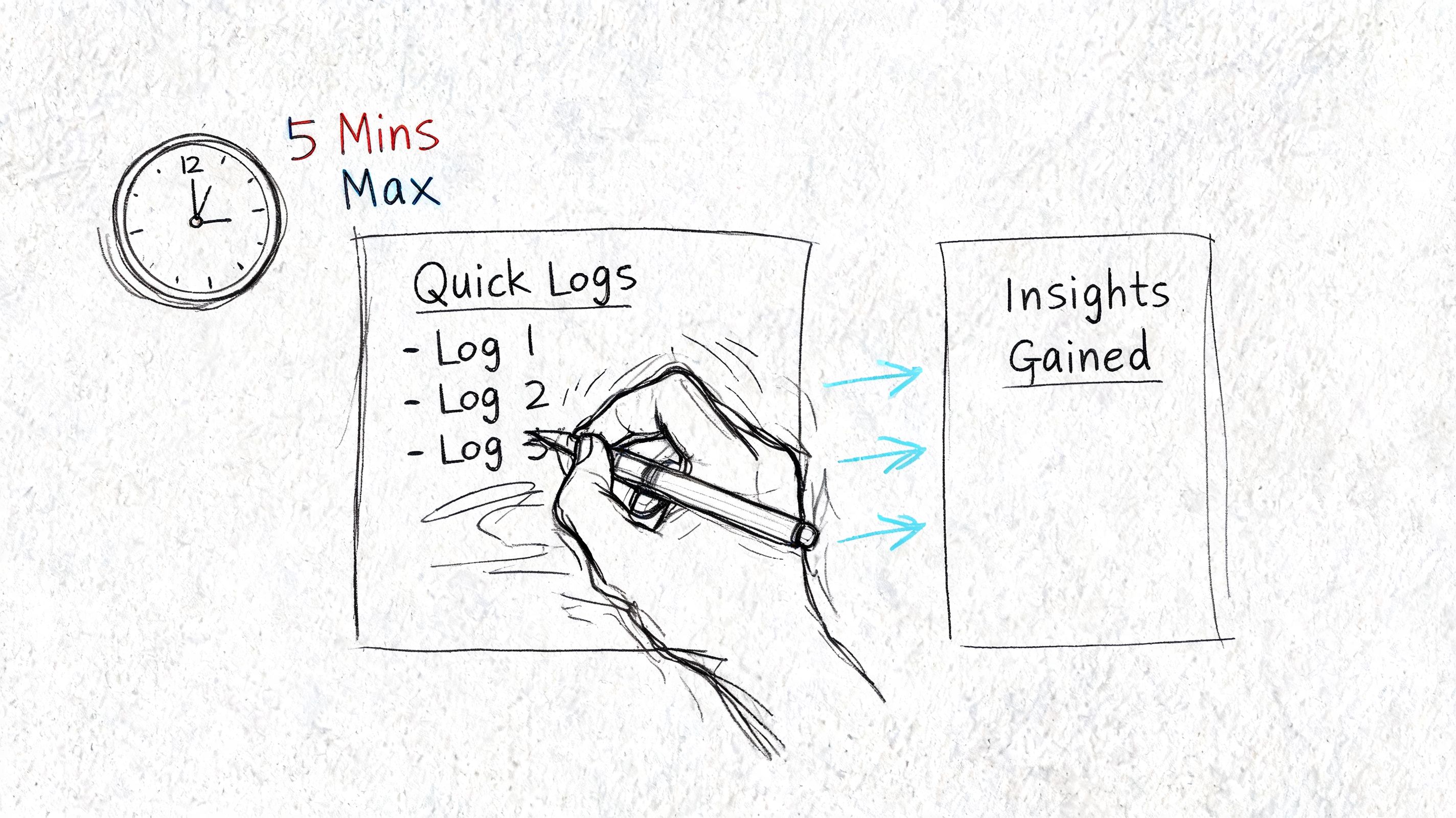
Self-reporting adherence drops hard over time. One review of mood charting practice notes chronic use can fall below 30%, while gamified entries and hybrid paper-digital setups can help sustain use, and brief reflection paired with tracking has been linked with improved emotional regulation for many clients (paper charts review on adherence and hybrid methods).
So don’t build a noble system. Build a sticky one.
Use micro-logs not heroic journaling
I recommend two or three tiny check-ins a day, not one reflective essay at night.
Try this:
- Morning check-in
Sleep. Energy. First task type. Emotional weather. - Midday check-in
Focus quality. Food. Sensory load. Meeting density. - Evening check-in
Mood label. Main trigger or lift. Delegation friction. One sentence of reflection.
That’s it. Each check-in should take about a minute.
The reason this works is simple. By evening, recall gets distorted. ADHD brains are especially bad at reconstructing a day accurately once the emotional state has shifted.
Make the act of tracking rewarding
Dopamine engineering matters here. If the process feels like admin, you’ll dodge it.
Use one or two of these:
- Habit stacking. Attach the morning log to coffee, the midday log to lunch, the evening log to shutdown.
- Visual completion. Use color blocks, circles, stickers, or a visible streak grid.
- Low-friction tools. Keep the paper sheet on your desk or home screen shortcut ready.
- Playful cues. Mandala fills, symbols, tiny icons. If it feels satisfying, it survives.
If you want app ideas for the habit layer, Recurrr’s top picks for habit tracking is useful for comparing lightweight options without overcomplicating the setup.
A timer also helps. One short countdown keeps the check-in from expanding into avoidance theater. If that’s your style, a good multiple timer app setup for ADHD makes this almost automatic.
This short video gives you the spirit of the system. Fast capture, not perfection.
Field test rule: End each day with one sentence, not a paragraph. “Low mood after team admin, recovered during product strategy block.” That’s enough.
Reading the Patterns Your Brain Is Showing You
Collecting logs without review is just decorated procrastination.
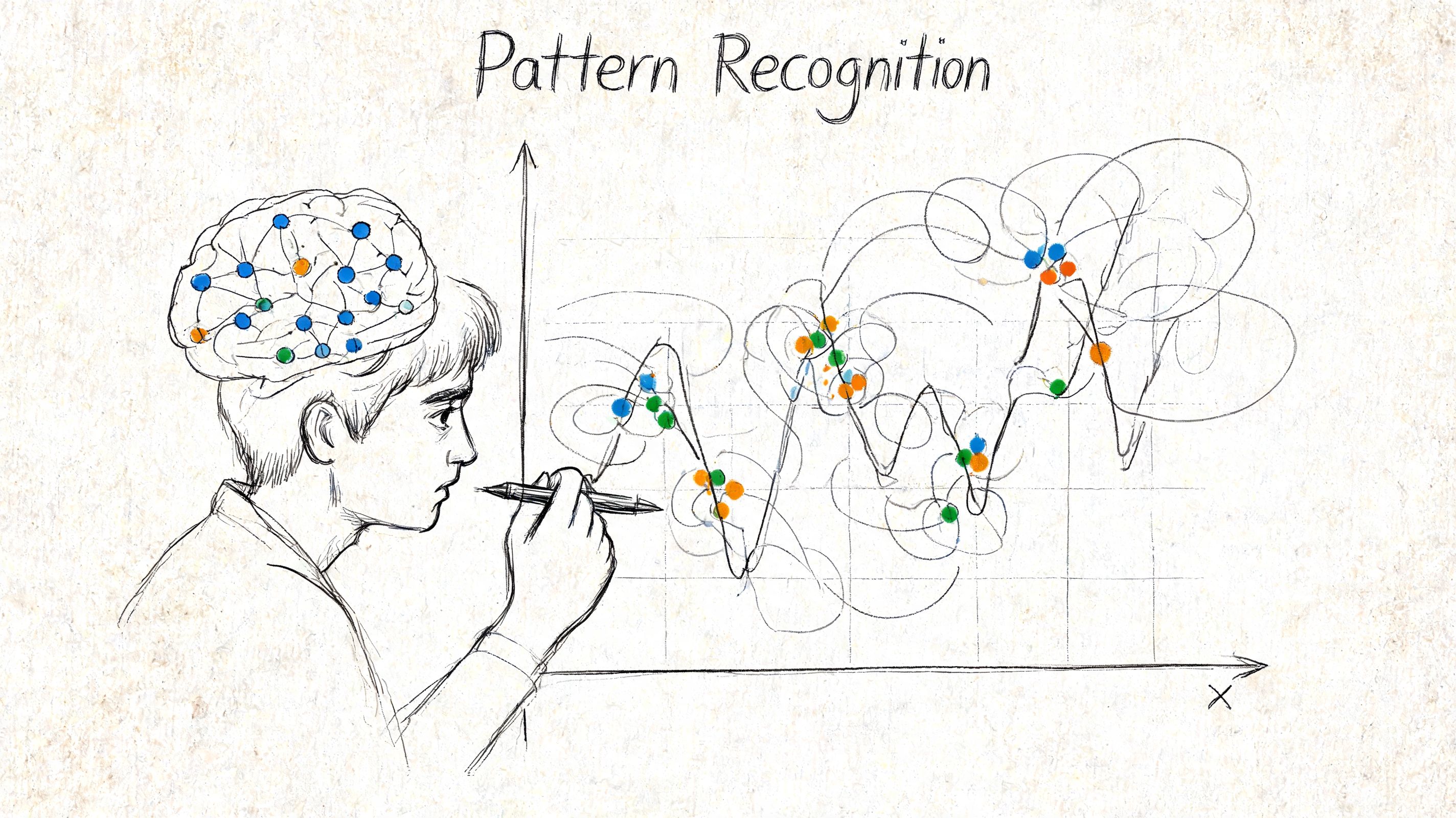
The value shows up in the weekly read. One therapeutic guide recommends exactly that kind of review, connecting chart patterns with life events. It also notes that for dynamic profiles like ADHD entrepreneurs, single daily entries can miss 40% to 60% of emotional depth, and that reviewing sleep and mood together can produce useful insight because the correlation is often strong (r = 0.65 in the cited example) (Blueprint guide to mood charts in therapy).
Run a weekly review like a founder
Don’t stare at the chart and wait for enlightenment. Ask direct questions.
Use this shortlist every week:
- Where did my best focus happen? Look for time of day, task type, and setup.
- What preceded my worst mood dips? Check sleep, meetings, food, noise, and task ownership.
- Which days felt heavy but productive? That tells you stress and output were not the same thing.
- Which days felt bad because I worked outside my role? That’s often a delegation issue, not resilience failure.
- What repeated twice or more? One weird day is noise. Recurrence is signal.
Use simple if-then interpretation
You don’t need advanced analytics. You need clean interpretation.
Examples:
- If focus drops after stacked afternoon calls, then stop putting decision-heavy work after calls.
- If your mood dips on admin-heavy days, then batch admin or delegate more of it.
- If low sleep predicts irritability, then reduce exposure to conflict-heavy tasks the next day.
- If creative work lifts both mood and focus, then protect maker time before reactive work opens.
- If food timing changes your afternoon stability, then treat nutrition as a calendar event, not a wish.
Most founders review revenue weekly and never review their own cognitive performance. That’s absurd.
Sometimes your chart also points to a medical question, not just a scheduling one. If your swings look intense, persistent, or disconnected from workload, broader health markers may be worth checking. This overview of blood tests for mood swings is a practical starting point for what to discuss with a clinician.
The chart won’t diagnose you. It will make your next decision sharper.
Integrating Your Chart into Your Daily Operating System
Insight only matters if it changes behavior.
Many individuals approach mood charts for adults as a retrospective wellness exercise. That’s too passive. Founders should use them to redesign the week.
Turn patterns into calendar rules
If your chart shows deep work lifts both focus and emotional stability, block it first. Don’t “try” to protect it. Put it on the calendar before meetings can invade it.
If your chart shows social intensity trashes your next morning, stop scheduling dinner networking and early strategic work back-to-back. If startup life already runs hot, your calendar has to absorb the truth of your nervous system.
A lot of founders also benefit from pairing mood patterns with a stable startup morning structure. This guide to an ADHD morning routine for entrepreneurs is useful if your first two hours currently decide whether the whole day collapses.
Delegate from evidence not guilt
The strongest use of this system is strategic delegation.
When the chart repeatedly shows low mood, shallow focus, and rising irritability on days full of inbox triage, follow-up, scheduling, project coordination, or team chasing, stop moralizing it. Your brain is telling you something precise. Those tasks are expensive for you.
That doesn’t mean you’re above them. It means you’re paying too much to do them yourself.
Use the chart to sort work into three buckets:
-
Keep
Work that predictably increases clarity, useful momentum, or strategic value. -
Contain
Work that drains you but must still happen. Batch it, limit it, script it. -
Delegate
Work that repeatedly creates drag without meaningful founder upside.
Your chart should change your calendar, your meeting load, and your handoff design. If it doesn’t, you’re collecting trivia.
The whole practice then becomes worth it. You stop adapting your nervous system to a bad business design. You start adapting the business to the brain that has to run it.
Your Questions Answered
What if I miss a few days
Nothing is ruined. Resume on the next check-in.
ADHD founders quit systems because they treat one miss like a referendum on identity. It isn’t. Missing data is still data. If you skipped logging during a chaotic stretch, that often tells you the system needs less friction or better placement.
Isn’t this just one more chore
It is if you make it abstract.
It stops being a chore when the chart helps you prevent a bad week, protect a good one, or spot work that should never have been on your plate. Keep it short. Keep it visible. Keep it tied to decisions.
How long until I see useful results
You’ll usually notice patterns quickly if you log consistently enough to compare days. The first useful win is often simple. Better placement of deep work. Fewer back-to-back meetings. Cleaner awareness of what tanks your focus.
Don’t wait for perfect insight. Use the first obvious pattern and change something small.
If you’re tired of running your company through adrenaline, guesswork, and recovery cycles, Jan Kutschera helps founders with ADHD build operating systems that fit their wiring. His work is for people who want structure without becoming robotic, delegation without guilt, and momentum that doesn’t require constant crisis.
Jan Kutschera
German founder, diagnosed with ADHD at 51. Built 4 agencies, now building systems for neurodivergent entrepreneurs. German engineering for the ADHD brain.
Connect on LinkedInRelated Articles

How to Stop Procrastinating ADHD: A Founder's System
Learn how to stop procrastinating adhd using a founder's system. Ditch panic productivity with engineered workflows & sustainable reward loops for 2026.

ADHD Project Planning Notebook: A Founder's Guide
Ditch the chaos. Learn to build a project planning notebook for the ADHD founder. This guide covers dopamine-engineered layouts, delegation, and more.

Time Management Apps for ADHD: 10 Tools Compared for 2026
The best time management apps for ADHD brains compared. Tools that support focus, planning, and executive function — not just prettier to-do lists.