
ADHD Body Doubling for Founders: Why Being Alone Breaks You
ADHD body doubling works differently for founders. Here's why you freeze working alone, what the science says, and which formats actually fit your workflow.
Jan Kutschera
You have a deliverable due. You’ve cleared your schedule. Coffee is hot, laptop is open.
Three hours later, you’ve reorganized your files, checked Slack twelve times, and written four sentences.
This is not a discipline problem. It’s not a time management problem.
It might be a presence problem.
ADHD body doubling is one of the most underused tools in the ADHD toolkit. For founders, it matters more than most people realize, because founders are often the most isolated people in their own companies.
I know this from my own pattern. I spent years building businesses alone, convinced I needed better systems. The systems weren’t the issue. The room was.
This article breaks down what ADHD body doubling actually is, why it hits founders differently, and the specific formats that work when you’re running a company from a laptop by yourself.
What ADHD body doubling actually is
Body doubling is when someone else is physically or virtually present while you work.
That’s it. They don’t manage you. They don’t check your progress. They just exist nearby.
The term was popularized by ADHD coach Judith Kolberg, and ADDitude Magazine has documented it as one of the most consistently effective external-support strategies for people with ADHD. The definition: a body double is someone who sits with a person with ADHD as they tackle tasks that might be difficult to complete alone.
No magic. No system. Another human in the room, doing something.
For most people without ADHD, this sounds trivial. Why would another person’s presence matter if they’re not helping?
That’s exactly the question worth answering.
Why your brain needs a witness
ADHD is fundamentally an executive function problem. The brain’s ability to self-regulate, initiate tasks, maintain focus, and follow through is impaired. Not because you’re lazy or undisciplined. Because the neural circuits that govern these functions are wired differently.
Here’s the part most articles skip: one of the most potent external activators for ADHD executive function is the presence of another person.
CHADD research on body doubling points to several mechanisms at work:
- Social accountability. Knowing someone is present activates the part of the brain that cares what others think. Even without explicit monitoring, the brain shifts into a different mode.
- Reduced internal noise. Paradoxically, another person’s ambient presence can reduce the stream of anxious thoughts that derail solo work.
- External dopamine signal. Human proximity provides a low-level dopamine input that helps the ADHD brain cross the initiation threshold.
This is also why many founders find that cafes, coworking spaces, or even airport lounges unlock hours of productivity that a quiet home office refuses to deliver. The room isn’t optimized. The WiFi isn’t better. The other humans are the variable.
The dopamine loop in ADHD business work is worth understanding here. Without external signals, the ADHD brain struggles to generate enough internal motivation to start tasks that don’t feel immediately rewarding. Body doubling is one of the cheapest ways to provide that signal.
Why being a founder makes this harder
Employees have meetings. They have managers. They have colleagues in the same Slack channel, in the same building, on the same daily rhythm.
Founders often have none of that.
You make the calendar. You decide when to work. You answer to no one in the short term. If you stop working for two hours, no one immediately notices.
That freedom is what you wanted. And for ADHD founders, it can quietly break your productivity.
ADHD task paralysis gets worse in isolation. The empty calendar looks like freedom. To an ADHD brain, it often reads as a void. No structure, no witnesses, no urgency signal.
I’ve seen this across founders at every stage. They have the skill. They have the idea. They have the product. But when they sit down alone to build it, nothing happens.
Not because they don’t care. Because the room is empty.
What it feels like when it works (and when it doesn’t)
Body doubling feels like something clicked when it lands:
- You open the document you’ve been avoiding and start writing within thirty seconds
- Time passes without you noticing
- The task feels less loaded, less like the thing you’ve been dreading
- You finish what you started and feel faintly surprised
A solo work session without body doubling often feels like this:
- Tab switching every few minutes
- A vague restlessness that feels almost physical
- Finishing one task and losing the thread of what comes next
- The sense that something is specifically wrong with you as a person
The second description is not a character flaw. It’s a brain wiring description.
ADHD brains tend toward hyperfocus on things with built-in interest signals. They struggle with tasks that are routine, important but not urgent, or require sustained initiation without an external trigger. Working alone, in silence, on something administrative, is the perfect storm.
Why “just focus harder” doesn’t work here
Most productivity advice assumes you can manufacture focus through will.
Schedule focus blocks. Turn off notifications. Use the Pomodoro method. Write a time-block plan.
These tools can help. But they all address the wrong variable.
They optimize the environment for a brain that can self-regulate. ADHD doesn’t work that way. The ADHD brain doesn’t need a better system. It needs an external activation signal.
Telling an ADHD founder to just sit down and focus is like telling someone with low blood pressure to just pump harder. The mechanism is wrong. The output doesn’t come from wanting it more.
This is also why calendar apps accumulate unchecked tasks, why to-do lists grow without getting cleared, and why productivity advice designed for neurotypical work patterns almost always underdelivers for ADHD founders.
The fix is not discipline. The fix is the right external structure. Body doubling is one of the most effective and underused examples.
The Founder’s Body-Double Stack: four formats that actually work
Not all body doubling looks the same. The format matters, and different formats suit different types of work.
This is what I call the Founder’s Body-Double Stack. Four distinct modes, each suited to different contexts.
Mode 1: The Anchor Session
Someone sits with you, physically or on a video call, working on their own thing. No interaction required. You check in at the start (“I’m working on this proposal”), and again at the end. That’s the whole structure.
Best for: writing, deep work, anything that needs sustained focus. Works especially well in a cafe or coworking space where strangers function as passive body doubles.
Mode 2: The Sprint Pair
Two people on a video call. Each states what they’re doing for the next 25 minutes. They work. They check in. No commentary on each other’s work.
Best for: tasks you’ve been avoiding. The declaration at the start creates just enough social weight to get started.
Mode 3: The Work Room
An open video room that anyone can drop into. You’re present with others but not paired with a specific person. No agenda. People arrive, say what they’re working on, and do it.
Best for: founders who want the social ambient without scheduling. CHADD has documented these group body doubling formats as particularly effective for ADHD adults.
Mode 4: The Location Shift
Not technically a “person” solution, but functionally the same mechanism. Go somewhere people are working. Cafes. Coworking spaces. Libraries. The ambient presence of other humans activates the same social circuitry.
Best for: founder days where a scheduled session isn’t available, or when you need a context change that brings its own built-in presence.

How I stumbled into this pattern without knowing what it was
I spent years thinking the cafe phenomenon was a personal quirk.
I assumed I liked cafes because of the background noise, the change of scenery, some kind of stimulus preference.
Then I noticed what actually changed. In a cafe, I started tasks in under a minute. At home, alone, I could sit for forty minutes before generating momentum.
The task was the same. The coffee was worse. The WiFi was slower.
What changed was that I was no longer alone.
After getting diagnosed with ADHD at 51, this clicked. The cafe wasn’t a preference. It was a workaround I’d stumbled into across thirty years of not understanding why I worked the way I did.
And then there was the hospital stay. Three weeks. Sixteen days of fever. Surrounded by nurses, staff, other patients nearby. I worked better from that hospital bed than I had at my desk for weeks. Not because the tools were better. Because there were people around.
There’s something that cuts deep when you realize the thing you thought was discipline was actually proximity. You weren’t failing at focus. You were running a focus system that requires witnesses, in a room with no witnesses.
Real founder scenarios: what body doubling looks like in practice
Thomas, a SaaS founder. Spends most of his working hours solo, building the product. Sales calls are easy; he focuses effortlessly when someone else is on the line. Writing copy, building landing pages, reviewing analytics alone in his home office? The afternoon disappears. He started a standing video call with a peer founder who also works remotely. Not to talk. Just to have someone there. First week, his output noticeably improved. He’s kept it running every weekday since.
Nadia, a consultant. Struggles with invoicing and admin. Could do it in fifteen minutes if she could start. Takes all day to get to it. She opened a standing “admin hour” Zoom room on Friday mornings, shared with two colleagues who have the same pattern. They join, say what they’re clearing, and do it. She hasn’t missed a billing cycle since.
Marcus, a coach building a course. Could write course content with ease when running live workshops. Alone at a computer? Nothing. He started going to the same coworking space three mornings a week. Not for the amenities. For the rooms full of people working. His course shipped four weeks after he started.
None of these are about accountability in the traditional sense. No one is checking their work. No one is measuring their output. The body double isn’t a manager. It’s a presence.
Virtual body doubling: what works when you can’t share a room
In-person body doubling isn’t always possible. Founders work from home offices, remote locations, odd hours.
Virtual body doubling works. Here’s what makes it effective:
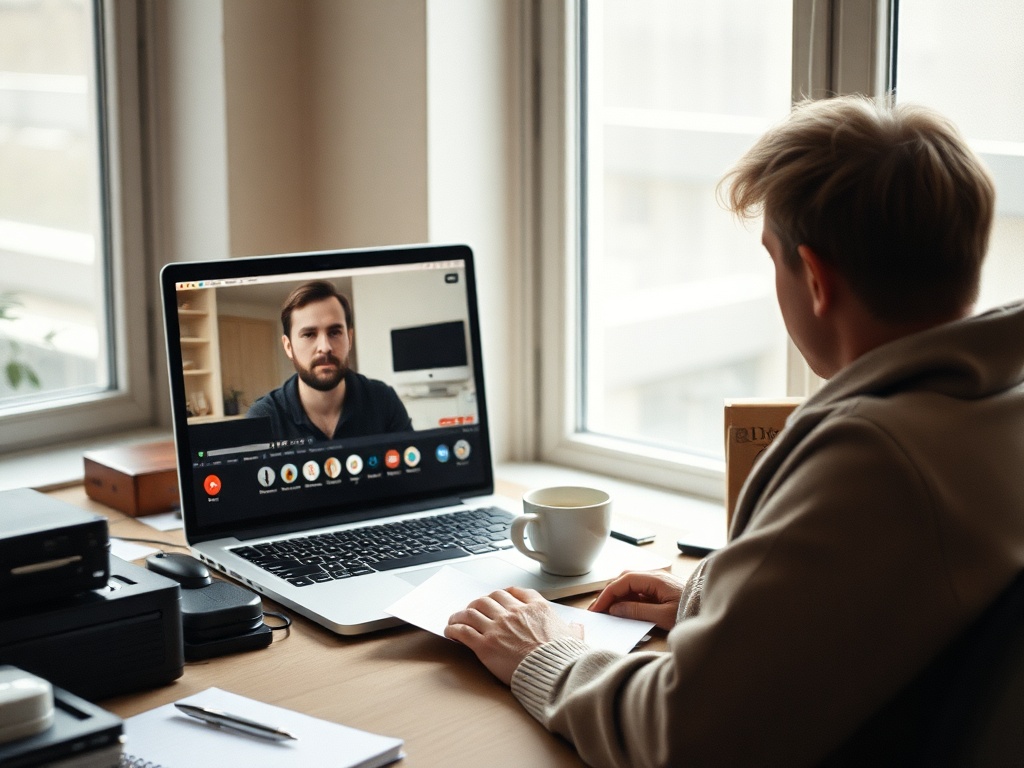
Camera on, no talking. The video connection needs to feel real. A phone call isn’t enough. Seeing another person’s face or presence on screen replicates enough of the social presence to activate the same mechanism.
Start with a declaration. Before you begin, say what you’re working on: “I’m writing the client brief for the next 30 minutes.” This anchors the session. Even one sentence is enough.
No checking in mid-session. The body double is not a status update channel. Check in at the end, not throughout. Interruption breaks the exact state you’re trying to create.
Keep the session short. 25 to 45 minutes is the sweet spot. Longer and the connection drifts; the ambient effect degrades.
Regularity matters more than any individual session. An occasional virtual work session helps. A recurring weekly slot changes how you work.
How to build body doubling into your week
The mistake founders make is treating body doubling as a rescue tool. Something you reach for when everything else has failed.
It works better as infrastructure. Something that exists on your schedule whether or not you’re struggling.
Three ways to build it in:
One standing session. Pick one time slot per week, recurring, with a specific person or group. Not when you feel like it. Same time, same day. This removes the activation cost of organizing it in the moment.
The location habit. If virtual doesn’t work well for you, pick a specific cafe or coworking space and commit to a fixed block there every week. The people change. The presence doesn’t. The location becomes a trigger for deep work mode.
The paired morning. If you have a founder peer, a business partner, or even a client with a similar work style, propose a standing weekly build morning on video. Ninety minutes, cameras on, each working on their own projects. Check in before and after. No agenda.
Building this into a structured ADHD morning routine for entrepreneurs helps the habit stick. Your body double session becomes part of a predictable start sequence, which reduces the mental overhead of deciding to do it.
When you can’t body double: the workarounds
Sometimes there’s no person available. No session scheduled. The room is just empty.
Here’s what functions as a partial substitute:
Ambient sound over silence. Specific cafe ambience audio, or background sound that replicates a working environment. Not perfect, but it activates a version of the same signal. Silence is often the worst environment for ADHD initiation.
The stated commitment. Send a message to anyone: “I’m working on X for the next 30 minutes.” The social weight of the statement can create just enough activation to start. The recipient doesn’t need to respond.
Self-recording. Some founders find that recording themselves working, or running a live stream even with no viewers, replicates part of the witnessed-presence effect. If being observed is the mechanism, simulating observation sometimes helps.
These are workarounds. They’re not as effective as the real thing. But if you’re stuck and the room is empty, they’re worth knowing.
ADHD body doubling FAQ for founders
Does the other person need to understand ADHD for this to work?
No. Body doubling isn’t therapy. The other person just needs to be present and working. Friends, colleagues, even strangers in a cafe function as body doubles. Understanding ADHD is irrelevant to the mechanism.
What if I feel awkward asking someone to just sit with me?
Most founder peers will say yes if you frame it correctly: “I work better when someone else is around. Can we do a weekly coworking call? No agenda, just working at the same time.” Most people understand this faster than you’d expect.
Can I body double with my partner or kids at home?
Partially. The presence helps, but the added variables (needing to manage the relationship, responding to interruptions) reduce the effect. Family presence is better than complete isolation, but a dedicated work body double is more effective.
Why does this work in cafes even though no one there knows me?
Because the mechanism is presence, not relationship. The brain doesn’t require a personal connection to activate the social circuitry that makes body doubling effective. Strangers working nearby is enough.
What if my body double is distracting instead of helpful?
The wrong body double makes things worse. If the person talks frequently, interrupts, or pulls your attention, the session works against you. The body double needs to be doing their own focused work, not drawing on your attention.
Is body doubling the same as having someone hold you to your goals?
No. A goal check-in setup involves someone reviewing your progress and calling you on commitments. A body double is just present while you work. The structures are completely different. Body doubling doesn’t require any reporting or goal-tracking. It’s purely an environmental change that you can use today.
Your next move: this week, not next month
Don’t add this to the list of things you’ll try someday.
This week, do one of these three things:
- Message a founder peer today: “Want to do a weekly work-together call? No agenda, just building at the same time.”
- Go to a cafe or coworking space for the specific task you’ve been avoiding. Put yourself in a room with other humans.
- Post in any founder group you’re in: “Anyone want to do a standing cowork call weekly?” You’ll get responses.
If you want to understand the deeper pattern, why your ADHD brain works the way it does in a business context and what structures actually hold during a bad week, the ADHD Founder Starter Kit is where to start. It includes the Brain Map assessment, which shows you exactly how your ADHD wiring shapes your business behavior and where the initiation gaps show up.
Body doubling solves the room problem. The Starter Kit helps you understand the brain problem.
Both matter.
Jan Kutschera
German founder, diagnosed with ADHD at 51. Built 4 agencies, now building systems for neurodivergent entrepreneurs. German engineering for the ADHD brain.
Connect on LinkedInRelated Articles

ADHD Perfectionism: Why Founders Struggle to Launch
ADHD perfectionism isn't about high standards. It's avoidance disguised as quality control. Here's why founders never ship and what to do about it.

ADHD Flow State: How to Enter It on Demand (Not by Accident)
ADHD flow state is not magic. Learn how founders can trigger deep focus on purpose, protect it, and turn it into consistent business momentum.
ADHD Dopamine Seeking: How to Channel It Into Revenue
ADHD dopamine seeking quietly drains founder revenue. Learn how to spot it, redirect it, and turn scattered energy into focused execution.