ADHD Paralysis vs Executive Dysfunction: Key Differences & Fixes
ADHD paralysis and executive dysfunction are not the same thing. This guide breaks down the difference, why it matters for founders, and how to fix both.
Jan Kutschera
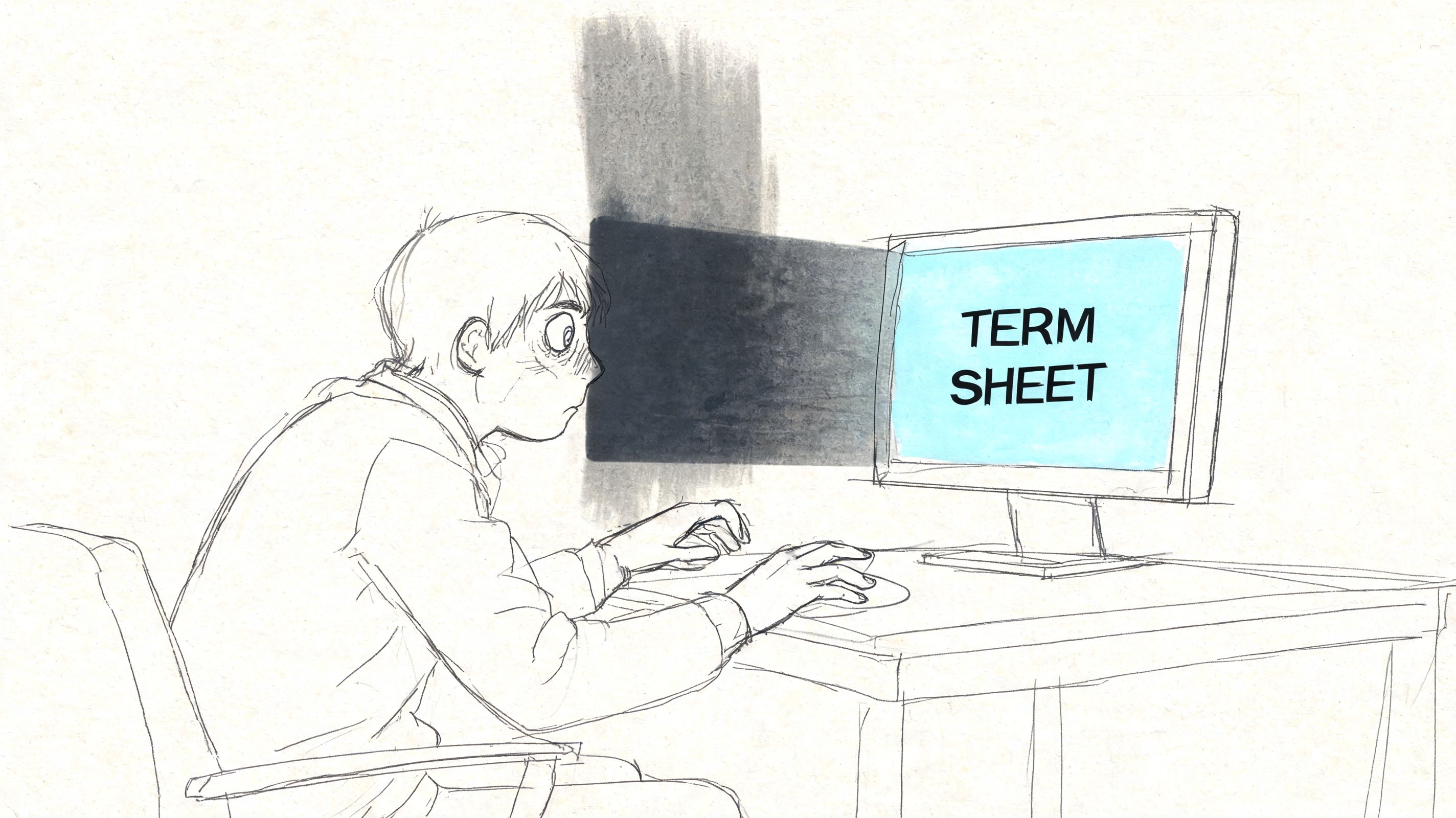
You know the task. You even want to do it. The term sheet is open, the investor email is starred, the hiring decision has been sitting in Slack for two days, and somehow your brain has decided that reorganizing a Notion database is the move.
That gap between intention and action is where a lot of founders with ADHD live. Not because they’re careless. Not because they lack ambition. Because high-stakes work exposes two different problems that look similar from the outside and feel miserable on the inside.
One is ADHD paralysis, the sharp freeze where you cannot start, decide, or switch. The other is executive dysfunction, the ongoing drag that makes planning, prioritizing, sequencing, and follow-through unreliable over time. If you run a company, confusing those two gets expensive. You’ll use the wrong fix for the wrong failure mode, then blame yourself when it doesn’t work.
Table of Contents
- The Founder’s Freeze Frame
- Defining The Key Players in Your Brain
- The Symptom-by-Symptom Showdown
- Recognizing the Patterns in Your Business
- From Coping Tactics to Engineered Systems
- When Systems Need Clinical Support
The Founder’s Freeze Frame
You’re at your desk. Revenue is fine, but cash is tight enough that this next decision matters. An investor wants a reply. Your lawyer needs comments. Your co-founder wants clarity. You open the document, read the first paragraph, then bounce to email, then Slack, then your calendar, then somehow end up researching office chairs.
From the outside, this looks ridiculous. You built the company. You can negotiate contracts. You’ve handled bigger problems. So the brain reaches for the most available insult: lazy, unserious, self-sabotaging.
That interpretation wrecks people.
A common experience for entrepreneurs with ADHD is misreading the freeze of paralysis as laziness or a character flaw. That self-criticism can worsen burnout, while some clinicians now describe paralysis more like an adaptive “dopamine safeguard” against overwhelming tasks than a simple deficit, as noted by Alpenglow’s discussion of ADHD paralysis and executive dysfunction{rel=“nofollow noopener”}.
You are not failing a motivation test. Your brain is failing a load-management test.
For founders, that distinction matters because your work is loaded with exactly the conditions that trigger shutdown. Ambiguity. Consequences. Social risk. Delayed reward. Too many viable options. No obvious first step.
Two different failure modes
When people search for adhd paralysis vs executive dysfunction, they’re usually describing one painful experience: “I can’t do the thing.” But under the hood, there are two patterns.
Paralysis is the acute freeze. It shows up around one decision, one task, one transition. You can feel it in your body. You know what matters and still can’t move.
Executive dysfunction is the chronic drag. It’s the reason your task list keeps mutating, your priorities drift, your handoffs stay fuzzy, and your calendar becomes a crime scene by Thursday.
Why founders confuse them
High performers often compensate so hard that the distinction blurs. Adrenaline can temporarily mask chronic dysfunction. A deadline can force action, which makes you think the system works. Then one unusually loaded task arrives and the whole machine locks up.
If you’ve built a business on last-minute sprints, panic productivity, and “I work best under pressure,” there’s a good chance you’ve been treating a systems problem like a discipline problem. The task paralysis guide for entrepreneurs breaks this down further for founders specifically.
Defining The Key Players in Your Brain
The cleanest way to understand this is to stop moralizing it and start modeling it.
Executive dysfunction is the operating system problem
Think of executive dysfunction as a buggy operating system. The applications may be good. Your ideas may be strong. Your intelligence may be high. But the background processes that make the machine usable keep glitching.
That includes planning, prioritizing, working memory, inhibition, organization, emotional regulation, and initiation. It’s chronic. It affects how you run a day, not just one ugly moment.
Psychologist Russell Barkley’s framework places impaired behavioral inhibition at the core of ADHD, which then disrupts downstream executive functions. The hierarchy operates as follows: all ADHD paralysis stems from executive dysfunction, but not all executive dysfunction results in paralysis, as explained in this overview of ADHD paralysis versus executive dysfunction{rel=“nofollow noopener”}. The role of dopamine in ADHD business performance is central to why that hierarchy exists.
If you want a plain-language breakdown of practical supports, the Sachs Center has a useful guide with actionable strategies for ADHD{rel=“nofollow noopener”}. For a founder-specific angle, this deeper explainer on ADHD executive dysfunction is worth keeping nearby.
ADHD paralysis is the application crash
Now take that already unreliable operating system and load it with uncertainty, emotional pressure, and too many options. That’s where ADHD paralysis shows up.
It’s not your whole brain failing all day. It’s a specific crash event. The machine stops responding right when the task feels consequential enough to matter. The freeze response in ADHD is a distinct nervous-system reaction, not a discipline gap.
A founder version looks like this:
- Fundraising: You can discuss strategy for an hour, but you can’t send the follow-up.
- Hiring: You’ve interviewed great candidates, but you freeze when it’s time to choose.
- Delegation: You know you need to hand off operations, but the act of defining the handoff stalls for weeks.
Practical rule: Executive dysfunction is “my system can’t manage this consistently.” Paralysis is “my system just locked up right now.”
Why the distinction changes what works
If you treat chronic executive dysfunction like a single bad mood, you’ll keep reaching for motivation tricks. They may help for an hour and fail by afternoon.
If you treat paralysis like a broad productivity issue, you’ll build giant planning systems when what you needed was a way to reduce overload and create a tiny, safe entry point. The executive function strategies for ADHD go deeper on the system side.
That’s why this distinction matters more in business than in theory. Founders don’t get judged on insight. They get judged on execution quality, timing, and trust. A frozen reply can kill momentum. A chronically broken planning system can slowly poison the company.
The Symptom-by-Symptom Showdown
Here’s the side-by-side version most founders need.
| Attribute | ADHD Paralysis (The Freeze) | Executive Dysfunction (The Drag) |
|---|---|---|
| Scope | Acute, situational shutdown around a task, decision, or transition | Broad, ongoing difficulty with self-management across many tasks |
| Primary trigger | Overload, uncertainty, pressure, emotional intensity, too many choices | Day-to-day cognitive load, weak planning, poor sequencing, limited working memory |
| Internal feeling | ”I can’t move" | "I can’t organize this” |
| Outward behavior | Staring, tab switching, avoidance, delaying a high-stakes move | Missed steps, poor prioritization, time blindness, messy follow-through |
| Founder example | You can’t reply to the acquisition email even though it’s urgent | You never build a reliable pipeline for handling inbound deals |
| Duration | Episodic. It comes in spikes | Persistent. It follows you through the week |
| Best first response | Reduce threat, reduce options, create frictionless first action | Externalize planning, simplify systems, delegate weak zones |
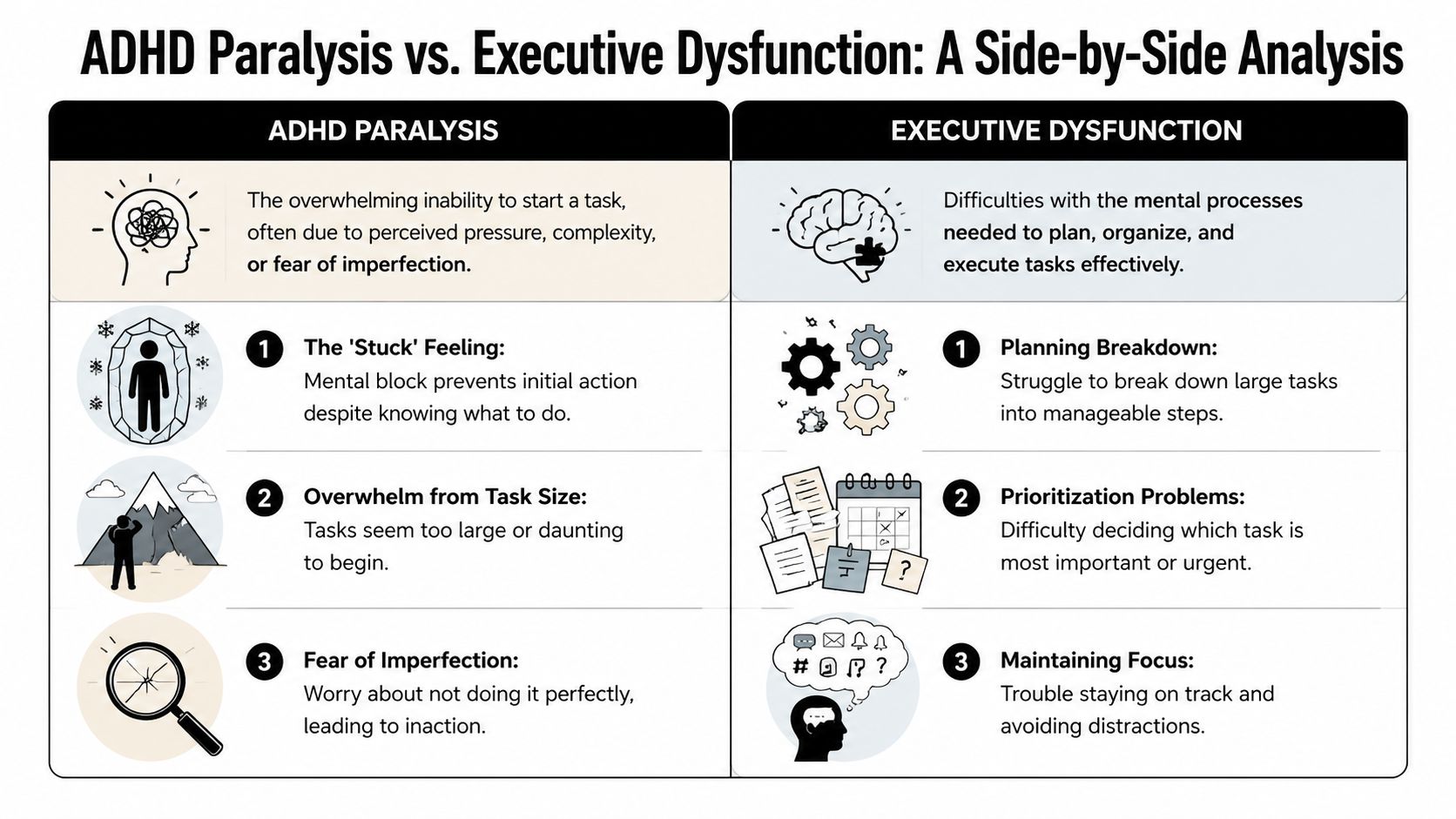
A clinical summary from FLOWN captures the split well: ADHD paralysis is an acute “freeze state” triggered by overload, affecting 68-82% of ADHD individuals and linked to significant work performance drops, while executive dysfunction is a broad, chronic impairment in skills like planning and initiation, with adults with ADHD showing large deficits compared to neurotypical controls in their review of ADHD paralysis versus executive dysfunction.
Same business, different failure
Take a product launch.
With paralysis, the founder gets stuck on one loaded move. Approving the pricing page. Sending the launch email. Picking between two positioning angles. The pressure spikes and the body says no.
With executive dysfunction, the founder struggles the whole way through. The brief is unclear. The timeline is unrealistic. Dependencies are not mapped. The team doesn’t know who owns what. Launch week feels chaotic because the system never held shape.
That’s why “just start” is useless advice. The founder with paralysis often wants to start desperately. The founder with executive dysfunction may start plenty of things and still fail to land them.
Founder-specific signals
A few examples make the split obvious.
-
Board materials
- Paralysis: You avoid opening the deck because one slide requires a hard narrative choice.
- Dysfunction: The deck stays messy because information lives across six tools and no one owns synthesis.
-
Sales
- Paralysis: You don’t send the proposal because the pricing feels emotionally loaded.
- Dysfunction: Your CRM hygiene is inconsistent, follow-ups drift, and deal stages stop meaning anything.
-
Team management
- Paralysis: You delay a difficult feedback conversation for days.
- Dysfunction: Roles, expectations, and recurring check-ins were never structured well in the first place.
If you want a broader symptom lens for self-checking, this adult checklist from Insight Diagnostics Global ADHD insights is useful. For the startup-specific version of being unable to begin, this piece on why you can’t start with ADHD paralysis maps closely to founder life.
A freeze is dramatic. A drag is sneaky. The freeze gets your attention. The drag drains your company.
What usually doesn’t work
A few common fixes miss the target:
- More shame: This increases threat. Threat feeds paralysis.
- More apps: If the problem is executive dysfunction, adding five tools can create five new failure points.
- Waiting for urgency: Adrenaline can break a freeze once. It’s a terrible operating model.
- Overplanning in your head: Internal planning is exactly the system that’s underperforming.
Recognizing the Patterns in Your Business
The easiest way to identify your dominant pattern is to stop thinking in terms of personality and start reading the business.
Founder Freeze
Founder Freeze is sharp, charismatic, and intermittently terrifying to work with.
This person can perform brilliantly in a sprint. They can sell on stage, rescue a client account, improvise in a crisis, and pull an all-nighter that looks heroic from a distance. Then they disappear in front of a decision that carries identity weight.
The team feels the pattern as bottlenecks. Pricing approval sits. The offer doesn’t ship. The hire doesn’t close. Nobody understands why a founder who can handle chaos gets stuck on one email.
Founder Drag
Founder Drag isn’t always dramatic. It’s expensive in a slower way.
This founder creates recurring confusion. Priorities shift midweek. Deadlines become vague suggestions. Team members ask for clarification three times because instructions arrived half-formed. Delegation happens late and without enough context, so tasks bounce back.
People often miss this because the founder is busy all the time. But activity isn’t the same as directed execution.
What the data says about work impact
Decision paralysis doesn’t just feel bad. It hits output. In one study, 68% of adults with ADHD reported that decision paralysis significantly impaired their work performance, and 74% said it led to avoiding or delaying critical life and career choices, according to this ADHD decision-paralysis study.
That maps closely to founder life because entrepreneurship is a job made of critical choices. You don’t just complete tasks. You pick paths under uncertainty. Decision paralysis in business is its own bottleneck, and it shows up differently from general task avoidance.
The founder’s job is decision quality under pressure. That’s exactly where paralysis extracts the highest tax.
A practical self-audit
Answer these truthfully, based on patterns rather than one bad week.
- Are your biggest problems episodic? Do you stall mainly around high-stakes, emotionally loaded tasks?
- Or are they systemic? Does the whole company feel harder to run because planning, organization, and prioritization keep slipping?
- What does your team complain about? Delays on key decisions point one way. Chronic ambiguity points the other.
- Where do you recover fastest? If one tiny action starts momentum, that suggests paralysis. If everything still feels structurally messy after you start, dysfunction is probably the deeper issue.
- What keeps repeating? A frozen fundraising reply is one event. A recurring inability to build repeatable reporting, onboarding, or delegation systems is another problem entirely.
Business signals to watch
If you like reading your mind through operating metrics, these are useful clues:
- Sales bottlenecks: Deals stall because you won’t send the uncomfortable message.
- Hiring lag: Great candidates cool off because decision windows stay open too long.
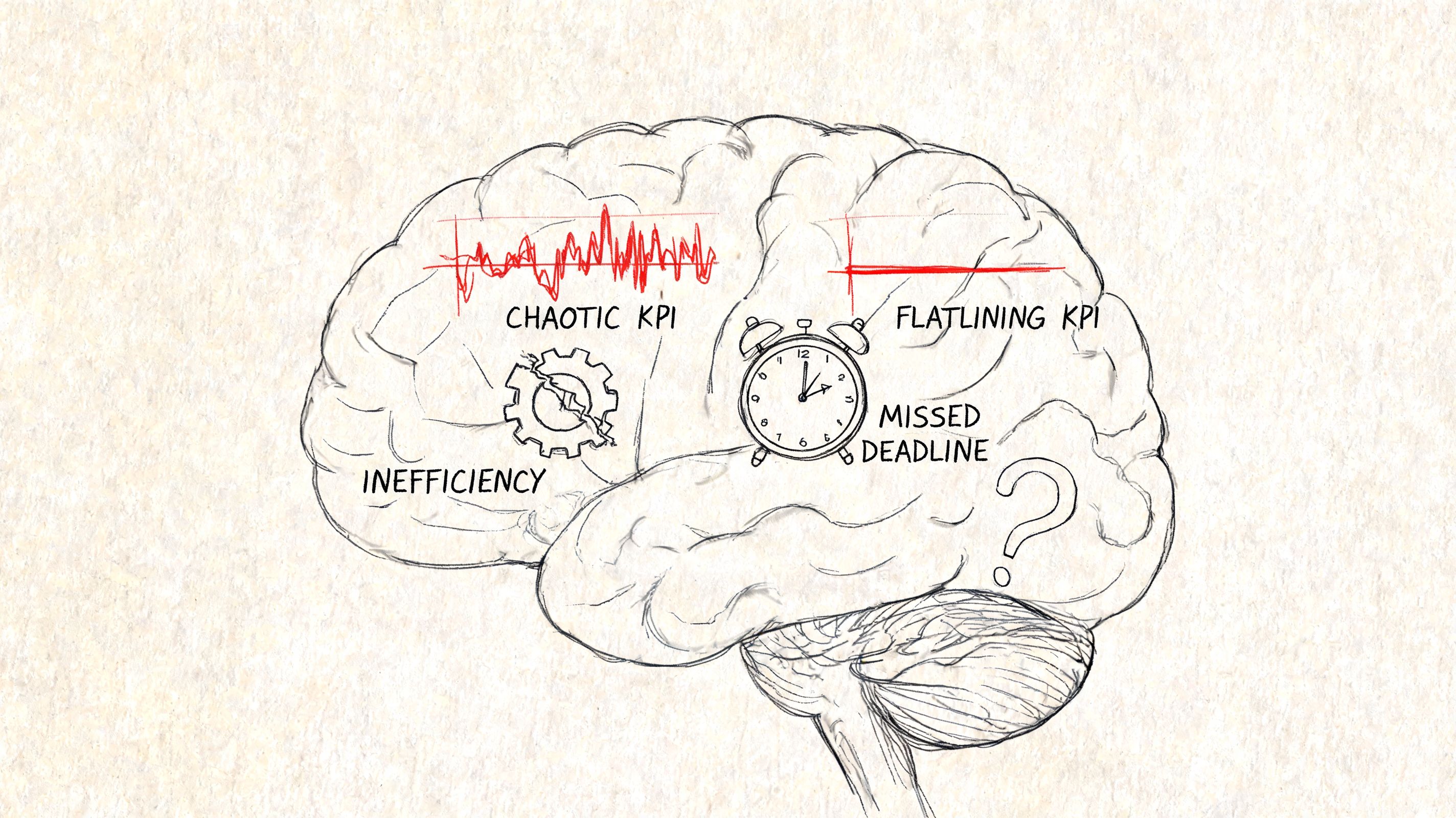
- Team churn risk: Strong employees leave when the founder’s internal chaos becomes everyone else’s external workload.
- Founder’s calendar distortion: Days are packed, but critical work keeps slipping to “later.”
The point isn’t to diagnose yourself from a blog post. It’s to stop using one label for two different problems. Once you can tell whether you’re in a freeze or a drag, the next move gets much more obvious.
From Coping Tactics to Engineered Systems
Most advice for ADHD founders is too small. It treats a high-performance operating problem like a morning routine issue. You don’t need more cute hacks. You need the right intervention for the right failure mode. If you’re looking for a broader starting point, this guide on how to be productive with ADHD covers the fundamentals before you go deeper into paralysis-specific fixes.
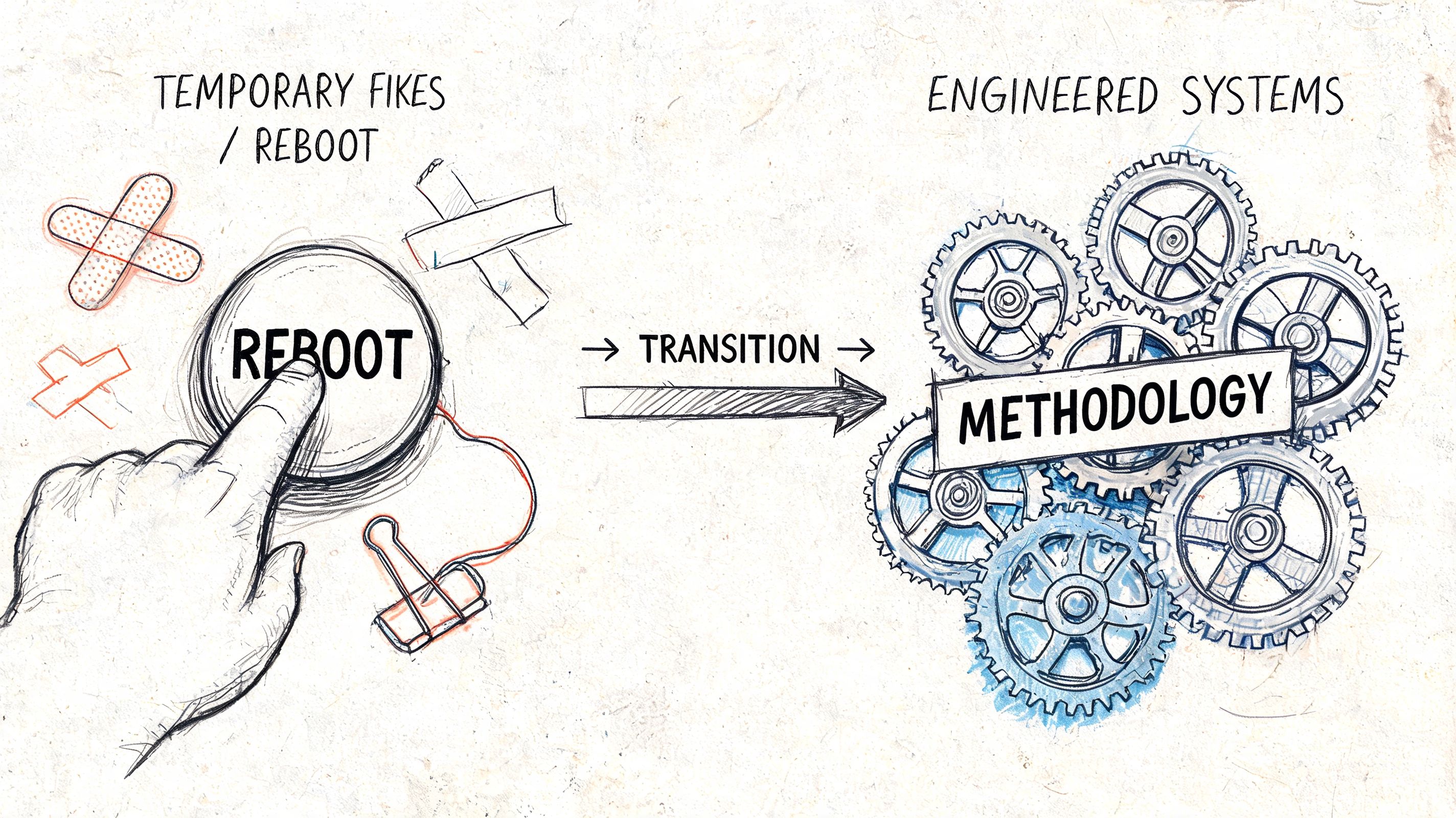
A treatment-oriented review aimed at ADHD executives makes the business cost hard to ignore: untreated co-occurrence of paralysis and dysfunction can double burnout risk, while pilot work on “Dopamine Engineering” reported a 52% reduction in paralysis and external structures described as “Cognitive Architecture” improved task initiation for dysfunction by 35%, according to this piece on recognizing the differences between ADHD paralysis and executive dysfunction.
The emergency reboot for paralysis
Paralysis needs an immediate downshift. Not a life redesign. Not a twelve-step productivity protocol. The job is to lower threat and shrink the entry point.
A few methods consistently work better than brute force.
Shrink the task until it feels almost stupid
Don’t write “respond to investor.” Write “open reply draft” or “type first sentence.” If the brain sees the whole mountain, it freezes. If it sees one handhold, it can often move.
Change the context
Paralysis often sticks to a specific environment. Move the task from your main desk to a plain-text note, a paper notebook, a coffee shop, or a call with someone else. Same task, less psychic weight.
Use body doubling or visible co-working
A second person changes state. They don’t need to help. Their presence can cut the isolation and shame spiral that keeps the freeze locked in.
Field note: If you can’t start alone, don’t keep proving that point for three hours. Change the social conditions.
Remove choices
If a decision is freezing you, reduce the menu. Two options. One criterion. One time box. The goal is forward motion, not perfect cognition.
For timing-heavy work, I also like using stacked alarms and visible countdowns instead of relying on felt time. This breakdown of a multiple timer app for ADHD workflows is useful when transitions keep collapsing.
The operating system upgrade for dysfunction
Executive dysfunction doesn’t care that you had one productive morning. It comes back tomorrow. That’s why long-term support has to live outside your head.
Cognitive Architecture
Build an external brain. One command center. One capture system. One weekly review. One visible place where priorities live.
Notion, Todoist, Sunsama, Trello, Asana, ClickUp. The exact tool matters less than the rule: your system must reduce working-memory load, not add to it.
A usable structure often includes:
- Single source of truth: Don’t split core priorities across Slack, email flags, random notes, and memory.
- Defined next actions: “Launch sales process” is not a task. “Approve outreach script” is.
- Weekly reset: Review projects, people, bottlenecks, and open loops before the week starts using you as a pinball.
Strategic delegation
A lot of founders say they’re bad at delegation when the underlying problem is this: delegation is an executive-function task. It requires scoping, sequencing, communication, follow-up, and trust.
So don’t delegate only when overwhelmed. Build handoff templates. Record walkthroughs. Define done. Put recurring work into checklists. Create role ownership before you need rescue.
Bio-optimization
This isn’t wellness fluff. Sleep debt, under-eating, overstimulation, and constant cortisol all make an already fragile system less reliable.
If your brain is your company’s command center, then sleep, food, movement, meds if prescribed, and environmental load are business infrastructure.
A short explainer helps here:
What works less than founders hope
Three traps show up constantly.
- Relying on urgency: You can scale a launch with urgency. You can’t scale a life with it.
- Building a giant custom system during avoidance: That’s often productive procrastination in a tuxedo.
- Mistaking stimulation for sustainability: Adrenaline can feel like focus. It usually bills you later.
What works is matching the fix to the failure. Reboot the freeze. Engineer around the drag.
When Systems Need Clinical Support
There’s a point where better systems stop being the whole answer.
Not because systems are useless. Because severe symptoms can overpower even good structure, especially when stress, burnout, anxiety, sleep problems, or depression are also in the mix. A founder can build a solid external setup and still keep crashing into the same wall.
That’s when getting professional support stops being a personal referendum and starts becoming a strategic move.
Signs it’s time to escalate
If any of these are true, it’s worth bringing in a clinician, coach, or both:
- Revenue-critical decisions keep stalling even after you’ve simplified the task and reduced friction.
- Your team is compensating for your inconsistency and resentment is building.
- You’ve built external systems, but can’t sustain them without constant rescue energy.
- You’re carrying significant shame, anxiety, or burnout around work that should be manageable.
- Your functioning drops across life, not just business. Sleep, money, relationships, and basic admin all start sliding together.
What clinical support can do that systems alone can’t
A good clinician can help sort out whether you’re dealing mainly with ADHD, a stress-amplified executive collapse, anxiety-driven freeze, burnout, depression, or some combination. For the non-clinical side, understanding motivation and willpower with ADHD helps explain why pushing harder often backfires. That matters because the right support depends on the actual pattern, not the label you picked up online.
A good ADHD-informed therapist or coach can also help with behavior design, emotional regulation, and implementation. A psychiatrist can assess medication options where appropriate. A physician can help rule out sleep, hormonal, or health issues that are pouring gasoline on the problem.
Hiring support for your brain is no stranger than hiring a CFO when finance gets complex. It’s the same leadership move in a different department.
Don’t wait for total failure
A lot of founders only seek help after a missed payroll scare, a damaged relationship, a team departure, or a body that stops cooperating. That’s late.
Earlier intervention is cleaner. Less collateral damage. Less identity injury. Better odds that your company stops depending on your nervous system being in exactly the right mood. Building an ADHD reward system for business momentum is part of that — it keeps you moving without needing a crisis.
The useful mindset is simple: systems first, then support where systems hit their limit. That isn’t weakness. It’s operational maturity.
If you’re tired of running your company on panic productivity and want systems built for an ADHD brain, Jan Kutschera helps founders replace burnout-driven hustle with engineered operating systems that fit how they work.
Jan Kutschera
German founder, diagnosed with ADHD at 51. Built 4 agencies, now building systems for neurodivergent entrepreneurs. German engineering for the ADHD brain.
Connect on LinkedInFrequently Asked Questions
What is the difference between ADHD paralysis and executive dysfunction?
ADHD paralysis is a nervous-system freeze response that makes it impossible to start a task, even when you want to. Executive dysfunction is a broader cognitive impairment that affects planning, organizing, working memory, and emotional regulation. All ADHD paralysis involves executive dysfunction, but not all executive dysfunction results in paralysis.
Can you have ADHD paralysis without executive dysfunction?
No. ADHD paralysis is a specific manifestation of executive dysfunction — specifically a failure of task initiation. However, you can have executive dysfunction (like poor working memory or time blindness) without experiencing the full freeze response of paralysis.
How do you break ADHD paralysis?
The most effective methods are body doubling, micro-tasking (break the task into absurdly small steps), and dopamine priming (do something engaging for 2 minutes first). Medication can also help by raising baseline dopamine levels, making task initiation less effortful.
Is ADHD paralysis a disability?
ADHD paralysis can be a significant functional impairment under the ADA if it substantially limits major life activities like working or learning. Whether it qualifies as a disability depends on severity and impact, not the diagnosis alone.
Related Articles

How to Stop Procrastinating ADHD: A Founder's System
Learn how to stop procrastinating adhd using a founder's system. Ditch panic productivity with engineered workflows & sustainable reward loops for 2026.

10 ADHD Executive Function Strategies for Founders
Unlock founder-level focus with these 10 ADHD executive function strategies. Ditch the burnout hustle for engineered systems built for the neurodivergent brain.

Visual Reminders for ADHD: Engineer Your Focus
Founders, ditch burnout! Learn to build high-impact visual reminders for ADHD. Go from panic productivity to an engineered operating system for success.