10 Exercise Accountability App Picks for ADHD Founders
Compare 10 exercise accountability app options for ADHD founders, with pricing notes, pros, cons, setup templates, and honest limits for each tool.
Jan Kutschera
You download a workout app on Monday night, somewhere between a deck and a Slack thread that should have closed an hour ago. Tuesday and Wednesday look perfect. Three green days. Thursday’s call runs long, the gym slot dies, and by Sunday the icon is just another badge you won’t tap. The problem is rarely motivation. It is a fragile executive system meeting a tool that wants consistent, delayed, and invisible effort.
This roundup treats an exercise accountability app as an operating constraint, not a feature list. I judge each pick on four ADHD mechanics: how fast a reward shows up, how much friction a check-in adds, whether the app verifies the work or trusts your honesty, and what the streak does after a missed week. Pricing clarity, social pressure, and platform limits sit in the same pass. Mordor Intelligence puts the failure in numbers that match the Sunday delete: roughly 71% of fitness-app users discontinue within 90 days, while day-30 retention averages only 8 to 12% on Android and 16% on iOS.
Each entry has a limitation, a use case, and a one-week setup so you can test against a real calendar instead of a fantasy one. If the streak breaks, restart tracking after a missed day before you redesign your whole life.
Table of Contents
- 1. Fitandem
- 2. Pactive
- 3. Strava
- 4. Supporti
- 5. HabitShare
- 6. Terbo
- 7. PayBack Fitness
- 8. OneStreak
- 9. Sweatmates
- 10. GymPal
- How the 10 exercise accountability apps compare on ADHD-relevant factors
- Pick One App, Build One Structure, Then Judge the Results After Two Weeks
1. Fitandem
Fitandem pairs two people who log movement separately. A walk, stretch, or full workout counts, and the shared streak grows only when both partners move that day. The reward can arrive quickly if your partner checks in; logging is manual, and activity is verified by trust rather than tracking. Miss a week and the shared streak stalls until both people log again. That makes the app simple, but your progress can depend on someone else’s calendar.
The site says basic accountability is free and that Fitandem is Android-only. Its Workout Finder may help when choosing an activity is the sticking point.
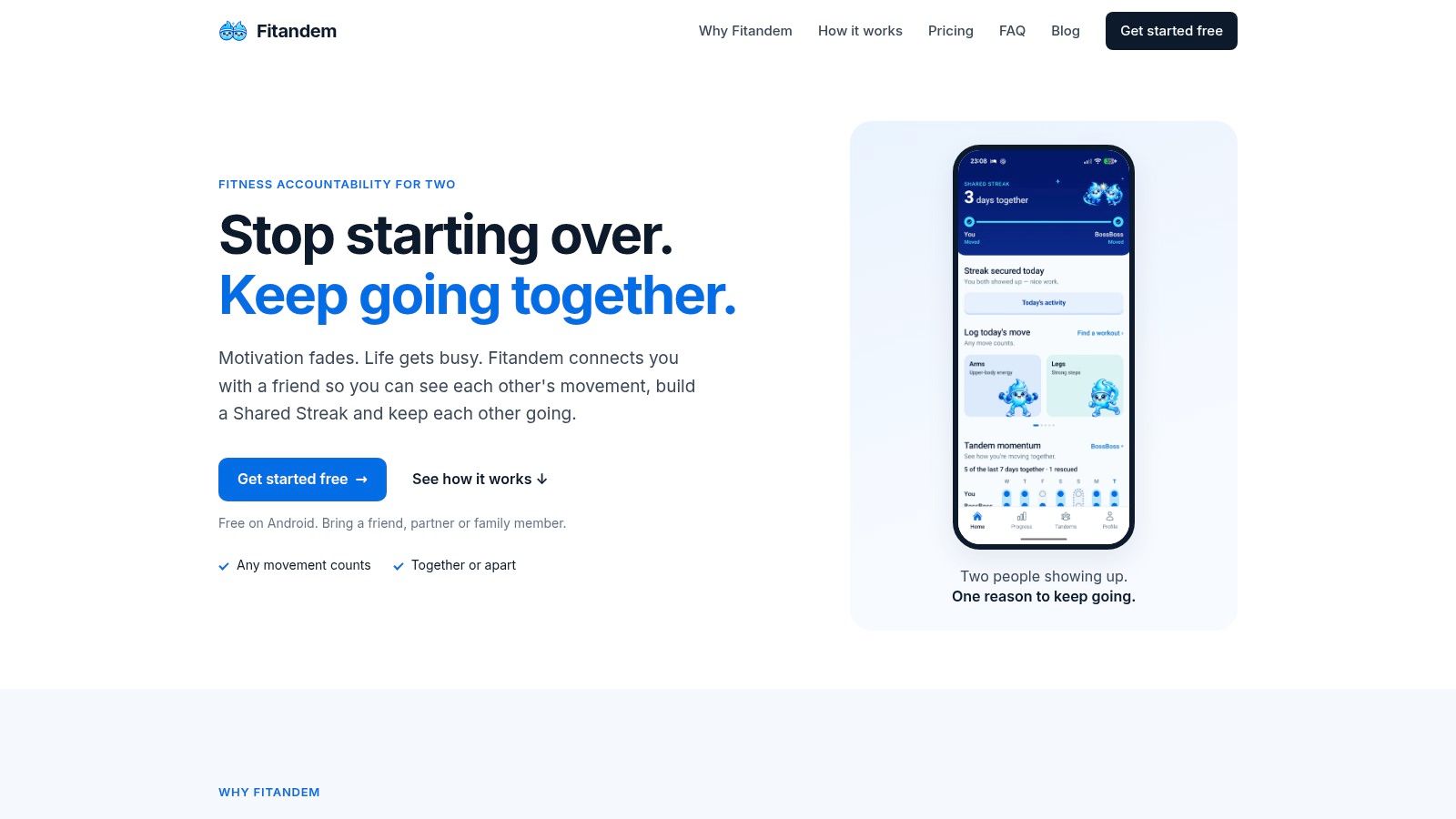
What works: one trusted partner, without a public scoreboard. What breaks: if they stop checking in, your shared streak stalls. Manual logging can also slip when you’re already late for a standup.
Practical rule: Use your partner for body doubling, not workout programming.
Setup: Pair with your cofounder. Walk for 10 minutes after the last meeting and log it before dinner. If either of you misses a day, take a reset walk the next day instead of turning the lapse into a guilt spiral. Try the routine for seven days with Fitandem.
2. Pactive
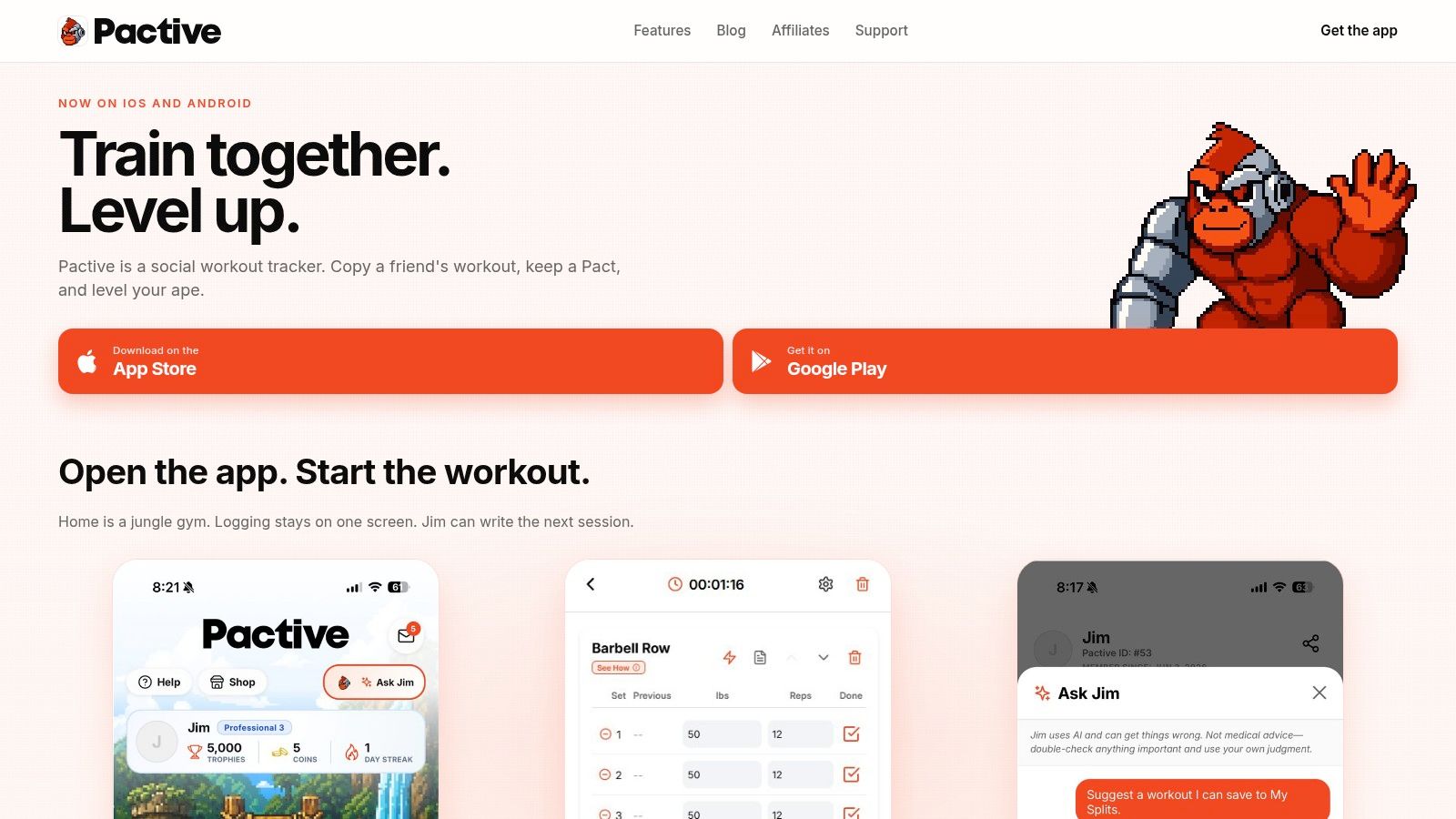
Pactive puts your workout history inside a group. Log a session, then share it in a public or private Pact with shared goals, check-ins, and rankings. Jim, its in-app AI coach, can answer programming questions using that history.
The workout log gives you an immediate record; rankings arrive as other members check in. Logging is manual, so activity isn’t independently verified. A missed week leaves a gap in your history and can push you down the rankings. Keep the group private if that comparison would turn a disrupted week into a reason to quit.
Pactive is listed for iOS and Android. Check Pactive’s current site for premium pricing before you commit to a paid tier.
- Keep the Pact private: A public ranking can make a travel week feel like a performance review.
- Ask Jim one practical question: Try “What is a 20-minute hotel session?” and keep the answer focused on the next workout.
- Use the history, not the leaderboard: Scan your log on Sunday to see what you completed.
Setup: Create a private Pact with two operators and set a goal of three sessions, any kind. Check in from the car after the gym, not from bed at midnight. After a missed week, log one session before checking the ranking. Start at Pactive.
3. Strava
Strava pays you fastest when the workout is outdoors and GPS can prove it. Record a run, ride, or walk, and the map is the receipt. Friends, clubs, and comments are the social layer. Private Group Challenges add a shared goal, but they need a subscription or a trial. Free recording and sharing is enough to see if the feed helps or hijacks you.
Reward speed is high on a recorded loop and near zero for an unlogged strength session in a hotel gym. Friction is low if the watch starts itself, high if you have to remember to hit record while a founder brain is already in the next meeting. A missed week doesn’t delete old activities. It just goes quiet, which is kinder than a broken chain and easier to ignore.
The feed, segments, and leaderboards can also become the workout. That is the failure mode if comparison drains you faster than the hill does. For a brain that needs a hit before the habit exists, pair the map with a small, planned reward you already trust, the same way you’d raise dopamine without another tab.
Setup: Three recorded walks, Tuesday, Thursday, and Saturday, 20 minutes, route saved. No segments until week two. Missed week means one ugly walk, posted to a private club only. Try it at Strava.
4. Supporti
Supporti pairs you with a person for seven days. Choose a daily action, such as a walk, yoga, or a short bodyweight set, then check in by chat. A human reply can make the action feel noticed; the trade-off is that messaging adds friction. Your activity is verified by your word and your partner’s attention, not by a sensor. After the week, you can keep the partner or match again.
The match works best when the check-in stays brief. A partner who expects essays can turn a small workout into another task on your calendar. They are not a trainer or clinician, and the format may feel like too much conversation if you want a private log. In a review of digital health coaching, researchers reported a pooled dropout estimate of 43%. A supportive chat can help, but it does not guarantee follow-through.
Setup: Try a seven-day match with one 12-minute walk after lunch each day. Send one photo and one sentence, then rematch on day eight if your partner disappears. Before sharing health details, agree on what an accountability partner is responsible for. Open Supporti.
5. HabitShare
HabitShare isn’t a workout app wearing accountability as a costume. It is a habit tracker. You build a daily or weekly target, set a reminder, and share only the habits you choose with people you already know. For movement, “walk three times this week” beats “become a runner.” The official site says the app is free.
Reward speed is a checkmark, fast and thin. Friction is one tap if the habit is pre-written. Verification is honesty. Nobody sees your route. A missed week doesn’t have to nuke the habit if you set it as weekly instead of a daily chain. The failure is inviting friends who never look, then mistaking silence for a system.
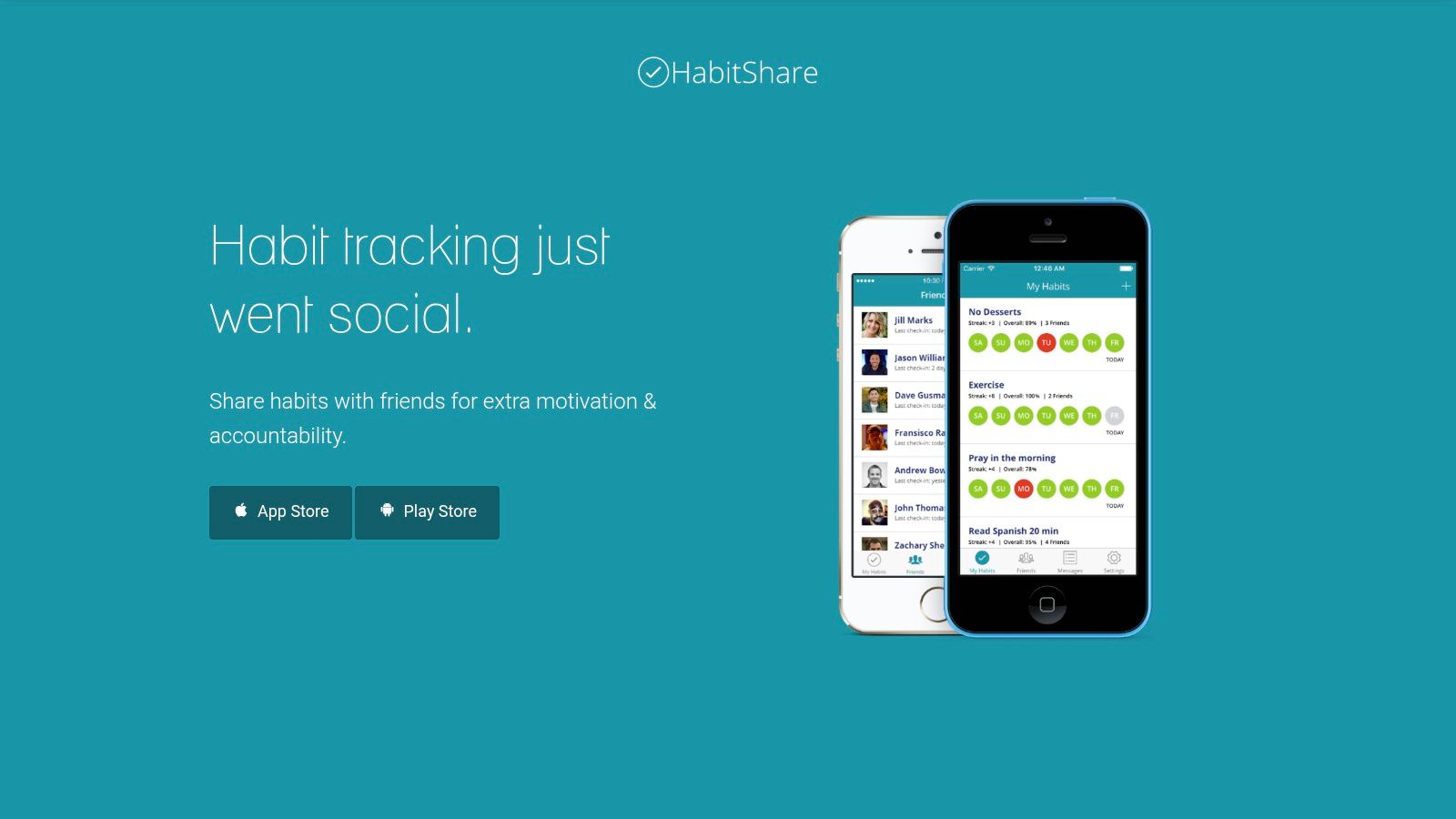
- Share one habit: Not sleep, meds, and mood. Just the walk.
- Weekly, not daily: Three checkmarks in seven days survive a Thursday blowup.
- Reminder on a real cue: After the school run or after standup, not “sometime.”
Setup: Habit named “move 10 minutes,” target three days, shared with one friend who already texts you. Missed week means the target stays three, not six. Build it at HabitShare.
6. Terbo
Terbo puts cash on the calendar: set a fitness challenge, deposit money, and earn it back by meeting the goal. You can choose a personal, group, community, or sponsor-a-friend format. Apple Health can verify activity from a device rather than relying only on your word, so you need a data source Health will see. Terbo’s site describes TestFlight early access, so availability may shift.
The reward arrives when the challenge ends, not after each workout. That delay suits people who respond to concrete stakes, but the deposit can make a missed week costly. Set a goal that can survive a launch week that eats into sleep. A challenge that demands perfect attendance can turn one disrupted week into a reason to quit.
A systematic review of smartphone health-behavior interventions found retention varied widely across studies. The review also noted that pressure to complete healthy activities can become a barrier.
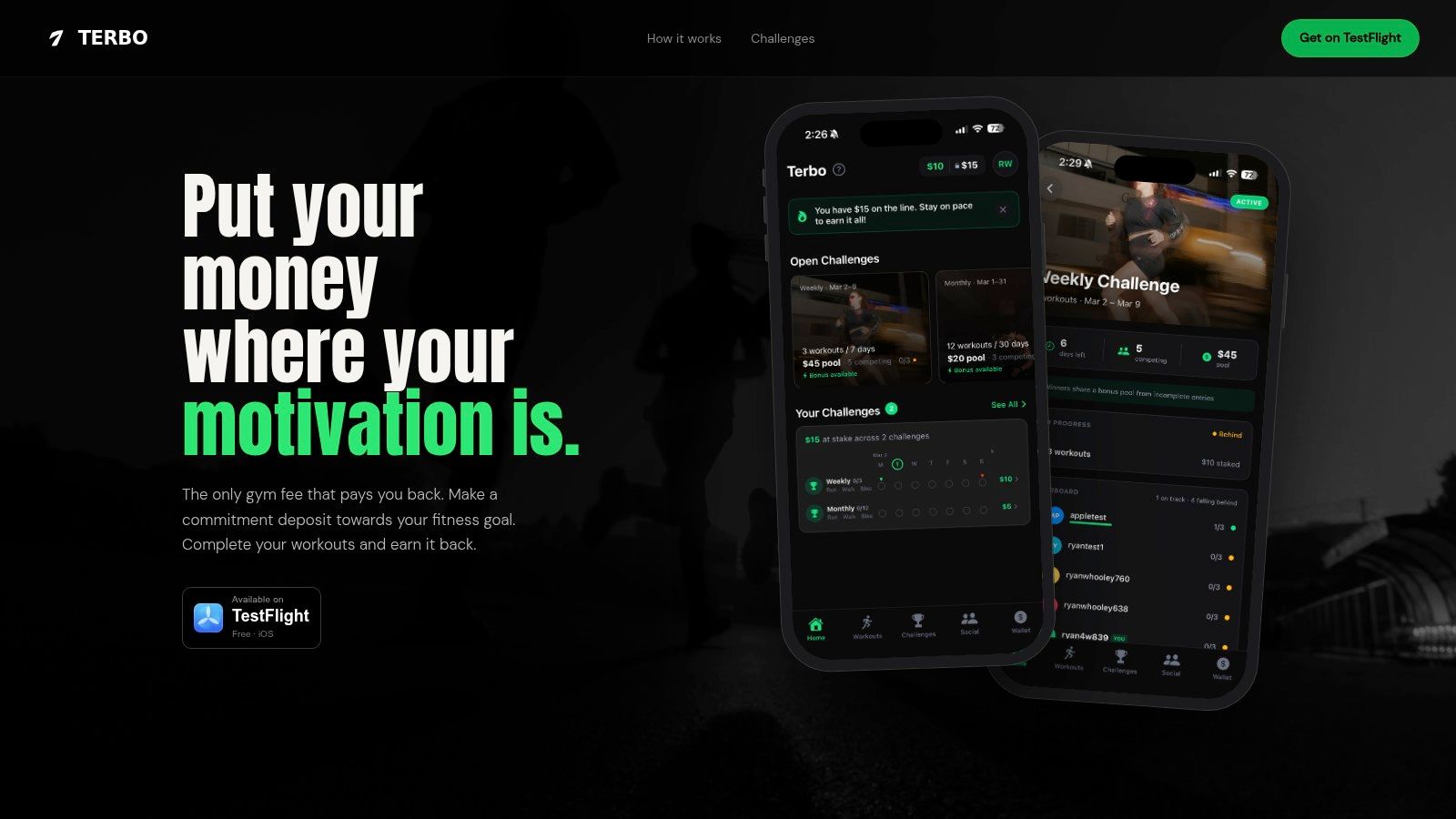
Setup: Start with a two-week personal challenge and a deposit small enough to sting if lost, but not disrupt rent. Set a target of four Apple Health movement days, not a perfect streak. Check that Health records your gym activity before putting money down. Review the challenge options at Terbo.
7. PayBack Fitness
PayBack Fitness puts weekly workout goals into a group points system. Set a goal, stake PF Points, and earn them back through consistency. The site says points can be redeemed for gift cards or donations, and any workout counts. Groups can include two to 50 people.
The check-ins are self-reported, not verified by sensors. That keeps tracking simple, but the points still add admin: if logging feels like another inbox, the reward may not arrive quickly enough to hold your attention. A missed week costs points and group standing. The broad workout rule helps: a stretch session can count when the barbell plan falls apart.
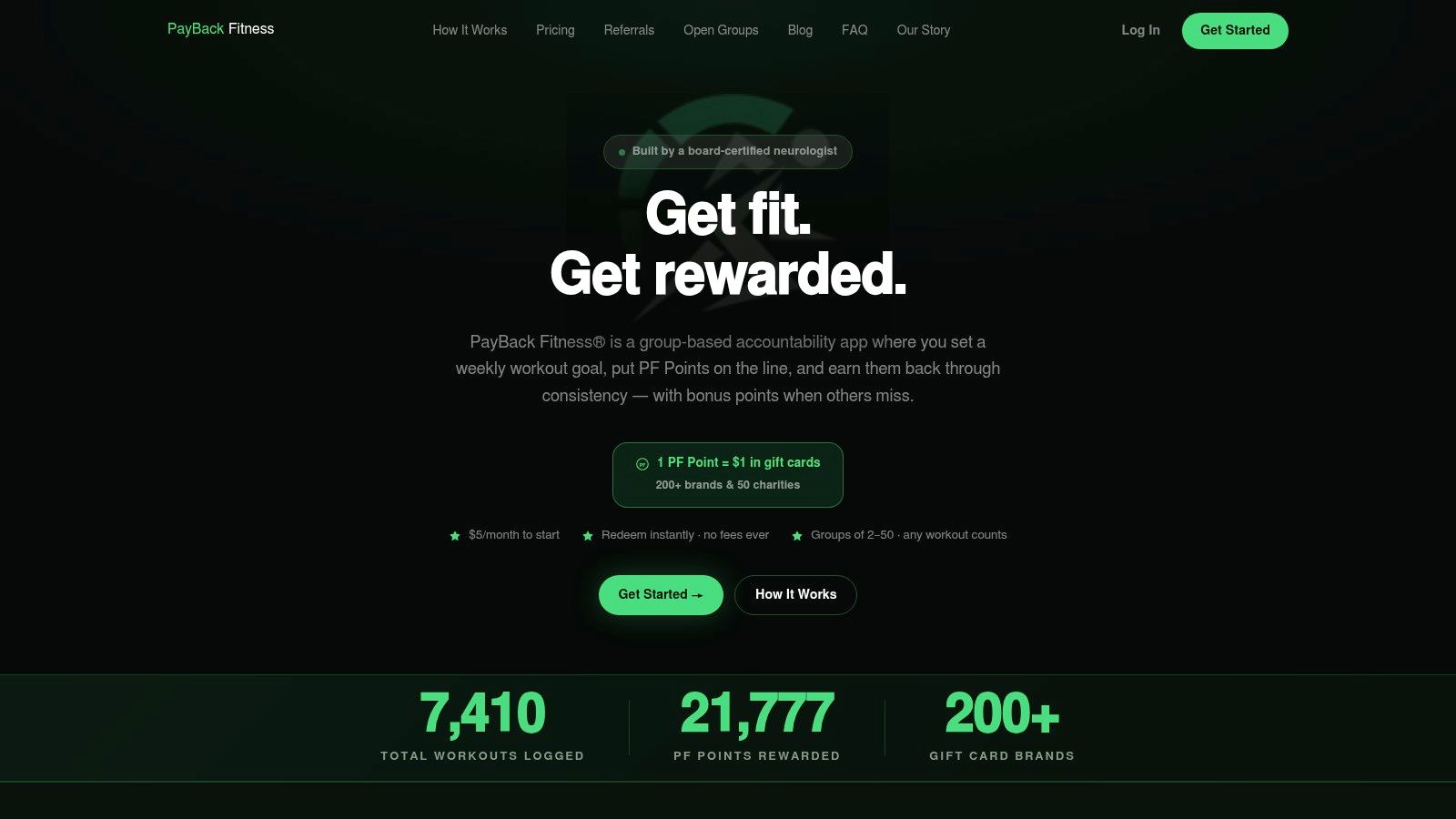
Setup: Start a group of three with a weekly goal of three sessions, including a 15-minute fallback. Keep the points stake small enough that a disrupted workweek does not turn the app into a source of stress. On Sunday night, redeem points or leave them, then close the app. Details are at PayBack Fitness.
8. OneStreak
OneStreak is a two-person pact with photo proof. You set a weekly goal, post a picture, and build a shared streak. History and photos stay in one place. There is no giant feed to fall into, which is the appeal if Strava’s crowd makes you perform. The App Store listing I reviewed was iPhone-only, so an Android partner can’t join the bit.
Reward speed is the shared streak plus a photo your person can see. Friction is the photo. In a locker room or a home office between calls, that extra tap is where the session goes unlogged. Verification is stronger than a checkbox and weaker than a heart-rate file. A missed week breaks the shared streak. Because the pact is weekly, you can still hit the count with a late session if you wrote the goal that way.
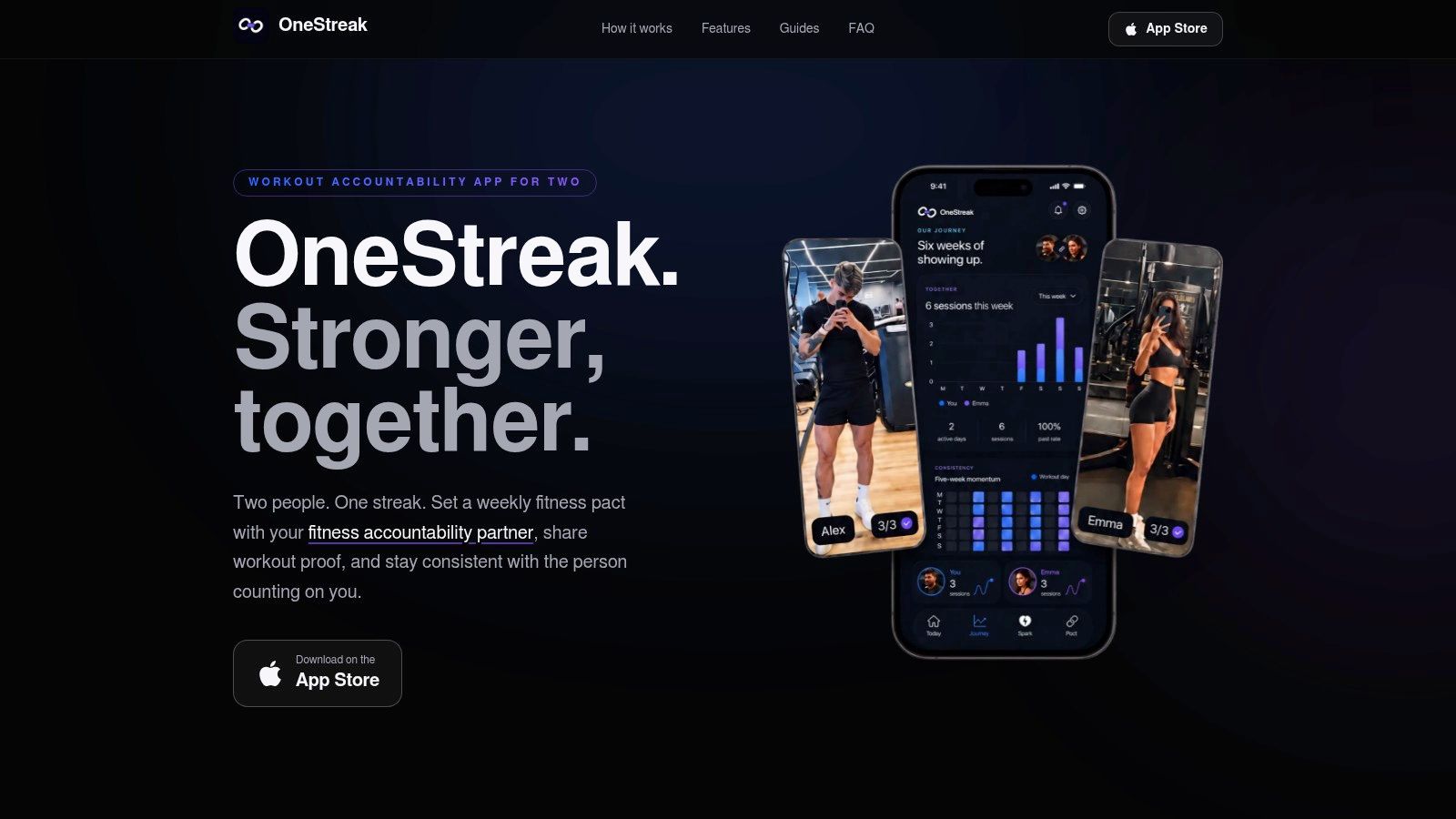
Setup: You and one gym friend. Goal is three sessions. Photo is a shoe or a watch, not a physique shot. If the week dies, the restart is one photo session, streak at zero, no speech. The app is at OneStreak.
9. Sweatmates
Sweatmates is about showing up, not watts and splits. You and a partner set a weekly goal, log with a photo, and watch the week fill in. Optional stakes stay light, a chore or dinner. There is also a feature that can temporarily limit a partner’s distracting apps once a week, which will feel either genius or like a bad roommate. The listing says workout logging needs a subscription. The App Store listing I reviewed was iPhone-only.
The reward is visible progress through the week, plus a silly stake if you both consent. Friction is the photo and the paywall before logging means anything. A missed week is a missed stake, not a public shaming, unless you pick a stake that humiliates you. Don’t.
A 2025 systematic review of digital physical-activity interventions among community-dwelling older adults found dropout from 4.2% to 46.7%. Among non-health-related dropouts, lack of motivation accounted for 25.5% and lack of time for 19.7%. Design the week for time, not for a speech about grit.
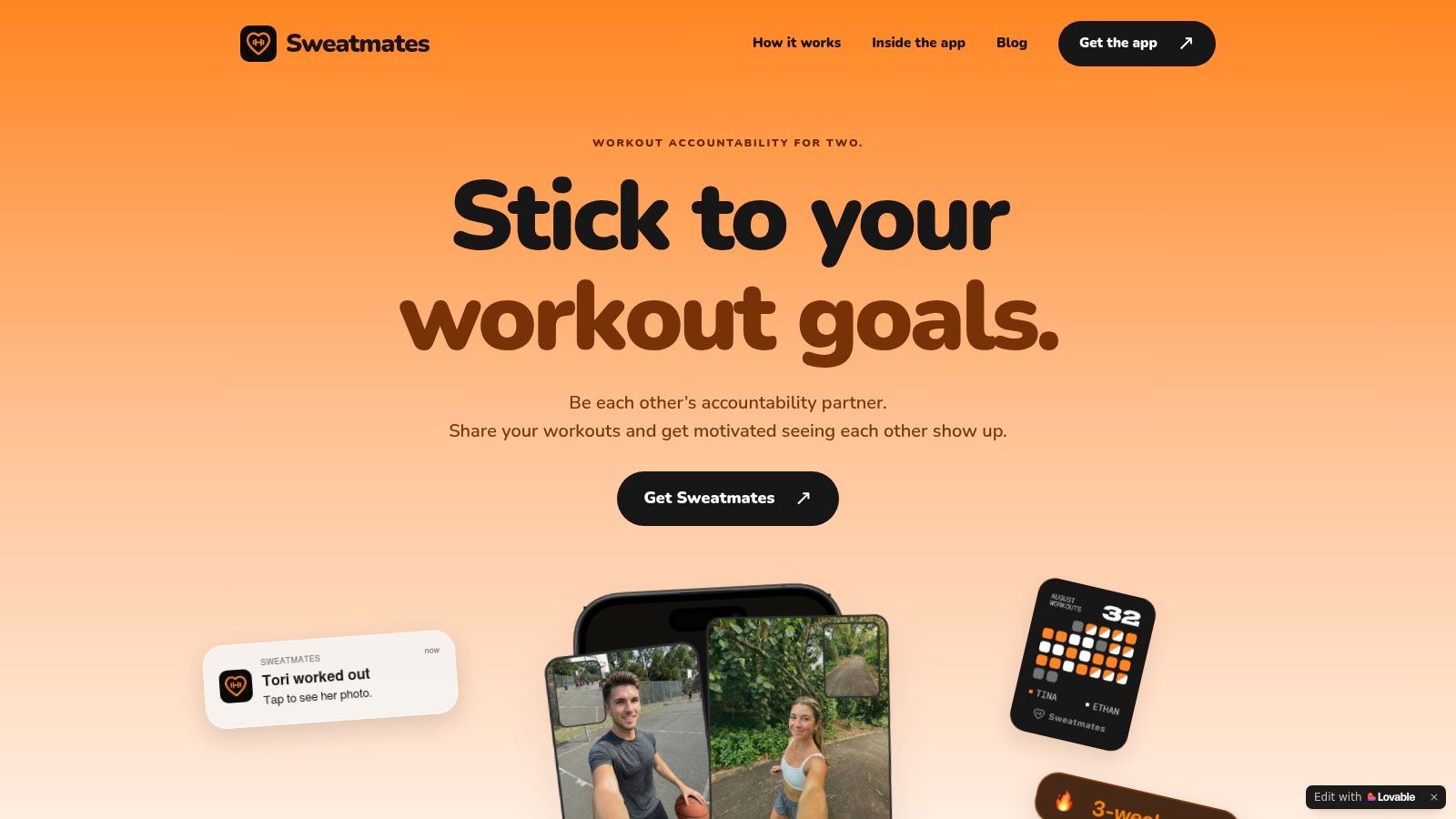
Setup: Two sessions minimum. Stake is making coffee for the other person, not money. App limit, if you use it, hits one social app for one evening after a miss. See Sweatmates.
10. GymPal
GymPal narrows the promise to attendance. You set a weekly gym-visit target, check in with a photo, and agree on a stake with a partner or a small squad. Stakes can be dinner or a chore, not only cash. That clarity helps if “did I go” is the only question your brain can answer. It fails if your real workout is a walk between terminals.
The listing says a subscription is required. Photo check-ins add friction at the door, when you are most likely to negotiate with yourself. The reviewed App Store listing was iPhone-only. Verification is the photo plus the person who expected it. A missed target triggers the stake you wrote in advance. If you didn’t write it, the app is just another camera roll.
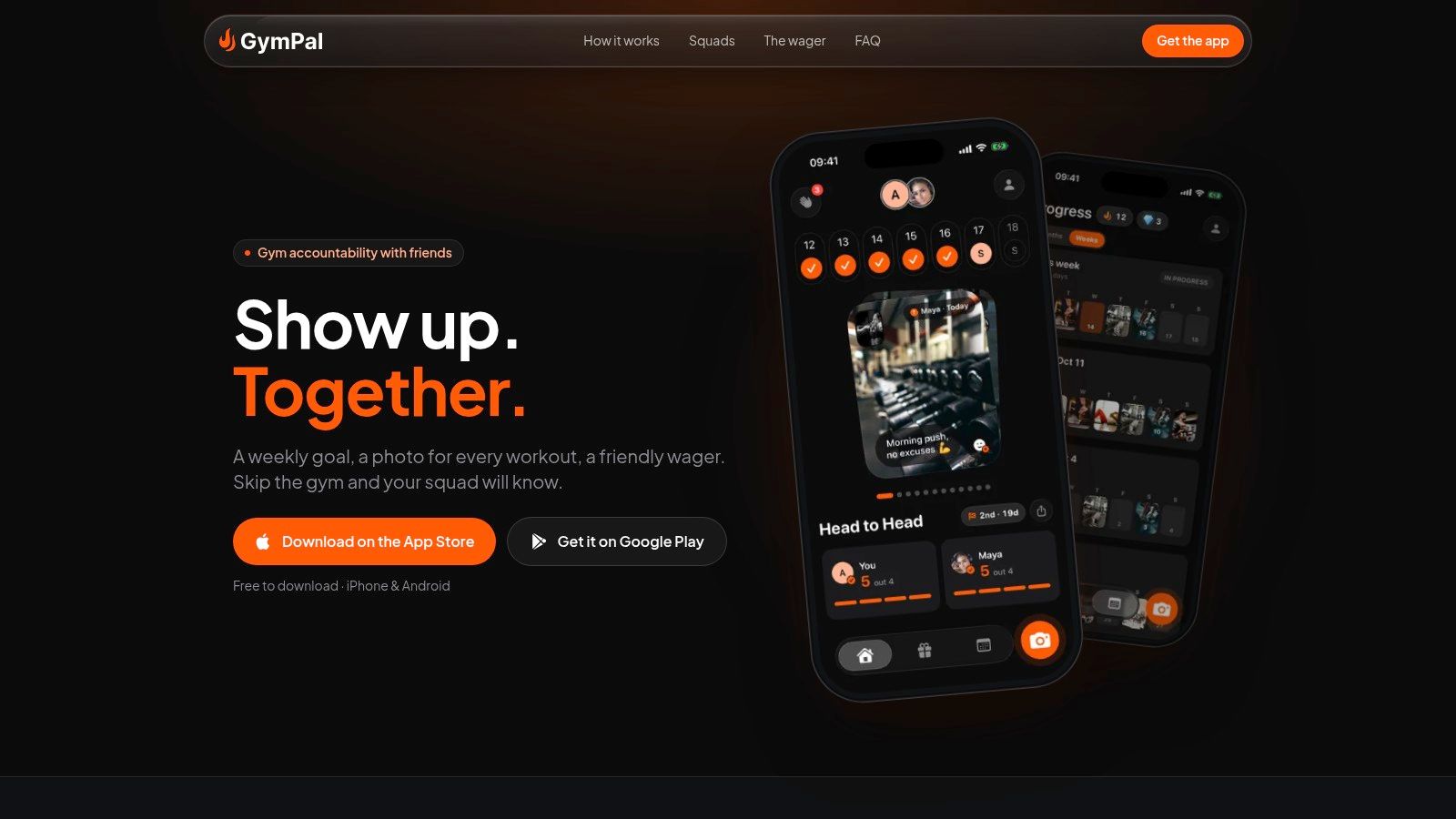
Setup: Two gym visits, Tuesday and Friday, photo of the front desk clock. Stake is you buy lunch. A missed week triggers the lunch and a single visit the next Monday, not a double target. Read the current terms at GymPal.
How the 10 exercise accountability apps compare on ADHD-relevant factors
The useful comparison is what happens on an ordinary, distracted week: how soon the app rewards a check-in, how much effort the check-in takes, whether activity is independently verified, and what happens after a missed week. The table sticks to mechanics described for each app. Where no missed-week rule is specified, plan one yourself before you start.
| App | Reward speed | Check-in friction | Verification method | What a missed week does |
|---|---|---|---|---|
| Fitandem | Partner accountability after a manual log | Low: log movement | Both partners log activity | No specific reset rule stated |
| Pactive | Group motivation after logging and checking in | Moderate: log workouts and check in with the group | Logged workouts and group check-ins | No specific reset rule stated |
| Strava | Activity feedback after recording | Low for tracked activities | Activity tracking, including GPS-friendly activities | No specific reset rule stated |
| Supporti | Human encouragement through daily partner check-ins | Low: check in with a partner | Partner check-in | No specific reset rule stated |
| HabitShare | Shared response after a habit check-in | Low: mark the habit yourself | Self-reported check-in | No specific reset rule stated |
| Terbo | Commitment challenge tied to financial stakes | Moderate: connect activity through Apple Health | Apple Health syncing | No specific reset rule stated |
| PayBack Fitness | Points and group rewards as workouts are tracked | Moderate: log workouts and track consistency points | Group workout tracking | No specific reset rule stated |
| OneStreak | Partner response after photo proof | Moderate: take and share a photo | Photo proof of workouts | No specific reset rule stated |
| Sweatmates | Partner response after a photo check-in | Moderate: log the workout and add a photo | Photo check-in | No specific reset rule stated |
| GymPal | Partner response after a gym photo check-in | Moderate: take a photo after the workout | Photo check-in | A missed target triggers the stake agreed in advance |
Fast feedback helps, but every extra step is another chance to put the phone down and forget. Manual logs and shared check-ins are quick, though they rely on honesty. Photos add proof and friction. Activity tracking or Apple Health syncing reduces manual reporting, but only works for activity the system can capture.
Set a missed-week rule before the first check-in. For any app without a stated reset rule, keep the next target steady and define the smallest restart session in advance. A streak should make returning easier, not turn one missed week into a punishment project.
Pick One App, Build One Structure, Then Judge the Results After Two Weeks
Pick the one exercise accountability app whose verification and reward timing match the week you live. If a partner’s text gets you out the door, Fitandem, Supporti, OneStreak, Sweatmates, or GymPal is the lane. If a map is the only receipt you’ll believe, Strava. If money focuses you and Apple Health can see the work, Terbo. If you need a log plus a private room, Pactive. If you only need a shared checkbox, HabitShare. If points and a squad sound fun and admin doesn’t, PayBack Fitness. Two apps means you are shopping, not training.
Tie the check-in to a cue that already exists. After the last call, after school pickup, after you close the laptop. Write the missed-day rule before day one. Mine is usually this: one minimum session within 24 hours, same weekly target, no doubling to “catch up,” no new app. A broken streak is a plan you already wrote. It isn’t evidence that you’re the kind of founder who can’t keep a promise.
Run 14 days. Then look at behavior, not vibes. Did you open it on the bad day? Did the check-in take under a minute? Did a miss produce the restart, or a shame spiral and a delete? If the tool needed a perfect week to look good, it lost.
The category around these tools is not small, which is why generic reminders keep shipping. Grand View Research valued the global fitness-app market at approximately USD 12.1 billion in 2025, with exercise and weight-loss applications at 53.7% of the market. Statista reported more than one-third of U.S. smartphone users tracking exercise or weight-related measures in a March 2024 survey. Familiarity isn’t follow-through. Your test is whether this one structure survives a Thursday.
If you want the app sitting inside a wider operating system, external structure for focus, reward, and recovery instead of another streak graphic, the frameworks at adhd-founder.com are built for that wiring.
Jan Kutschera helps ADHD founders swap panic productivity for an operating system that holds, including how movement gets scheduled like any other business constraint. The work covers external structure, reward design, delegation, and the basics of sleep and training so accountability isn’t another app you abandon. If your calendar keeps winning, start with Jan Kutschera.
Jan Kutschera
German founder, diagnosed with ADHD at 51. Built 4 agencies, now building systems for neurodivergent entrepreneurs. German engineering for the ADHD brain.
Connect on LinkedInRelated Articles

Weekly Chore Chart for Adults: An ADHD Founder's Guide
Ditch the generic lists. Build a weekly chore chart for adults with ADHD that works with your brain. A step-by-step guide for founders to engineer calm at home.

Operating System in Business: A Founder Guide
Learn what an operating system in business is, the five layers that carry execution, and how founders adapt it to their working style.
How Do I Increase My Attention Span for ADHD
How do I increase my attention span with ADHD? Match the stall, run a 90-minute block, quiet the room, and score real client work.